Understanding the Risks and Safety Measures for Hay Storage
Hay fires are a significant risk for farmers, especially when dealing with wet or improperly stored hay. This article outlines the causes of hay fires, prevention strategies, and steps to take if a fire occurs, ensuring the safety of your farm and livestock.
Causes of Hay Fires
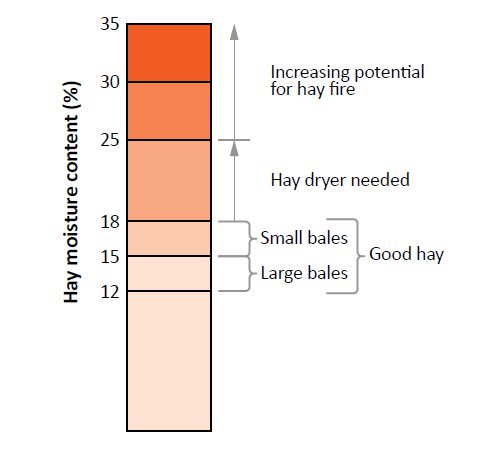
Hay fires primarily occur due to spontaneous combustion, which happens when hay is stored with a moisture content above 25%. The process involves:
- Heat Build-Up: Wet hay creates an environment conducive to bacterial and mold growth, leading to an initial temperature rise between 54°C and 65°C.
- Maillard Reaction: At these temperatures, a chemical reaction called the Maillard Reaction generates additional heat without needing oxygen.
- Ignition: If the generated gases reach a high enough temperature and are exposed to oxygen, a fire ignites.
Unusual growing conditions, such as an early harvest or immature crops, can complicate drying processes and increase fire risks.
Fire Prevention
Monitoring Moisture Levels
Maintaining the appropriate moisture content is crucial to prevent hay fires. Use a moisture tester or microwave oven to check the hay’s moisture content. Recommended moisture levels for storage are:
- Small squares: 15-18%
- Large rounds (soft core): 13-16%
- Large rounds (hard core): 12-15%
- Large squares: 12-14%
If hay exceeds these levels, consider using a hay dryer. Additionally, stack hay on edge to allow airflow and maintain bale shape.
Regular Inspections
Regularly check hay for signs of heating, such as a slight caramel or musty odor. Use a probing device to measure internal temperatures and detect potential hot spots. Create a probe from electrical tubing and a hardwood dowel, then insert a candy thermometer for accurate readings.
Temperature Guidelines
Refer to the following temperature guidelines to assess risk:
- Below 65°C: Check temperatures daily.
- 70°C: Measure every four hours and inspect the storage area.
- 80°C: Call the fire department immediately and keep storage closed to limit oxygen supply.
Extinguishing Hay Fires
Initial Steps
If you detect heating, remove animals and tools from the structure. Wet the hay down with help from the fire department and remove it from the barn, placing it a safe distance away to prevent re-ignition.
Removal Techniques
Use a High-Hoe or logging clam to remove heated hay pockets. Ensure the fire department is present with a water truck, as the material may flame when exposed to air. If the fire must be extinguished in the barn, wet the hay thoroughly and remove it immediately, being cautious of potential structural collapses.
Chemical Preservatives
Be aware of the risks associated with chemical preservatives in hay. Preservatives containing ethoxyquin and butylated hydroxytoluene (BHT) can produce deadly hydrogen cyanide gas at around 115°C (240°F). Those with primarily propionic acid do not produce hydrogen cyanide during a fire.
Error