• About
  • Advertise
  • Careers
  • Contact
Friday, January 30, 2026
  • Login
No Result
View All Result
Field Crops news
  • Home
  • News
  • AgroTech & Innovation
  • Science
  • Sustainability
  • Market News
  • Research & Development
  • Home
  • News
  • AgroTech & Innovation
  • Science
  • Sustainability
  • Market News
  • Research & Development
No Result
View All Result
Field Crops news
No Result
View All Result
Home Export

Pakistan’s New Wheat Import Ban and Flour Export Restriction: Implications for the Agricultural Sector

by Tatiana Ivanova
27 July 2024
in Export, Import
0
Pakistan’s New Wheat Import Ban and Flour Export Restriction: Implications for the Agricultural Sector
0
SHARES
23
VIEWS
Share on FacebookShare on Twitter

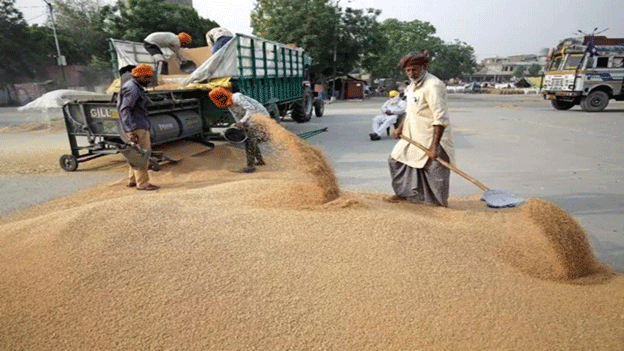
On July 13, 2024, the Government of Pakistan enacted a significant policy change by imposing a ban on wheat imports and flour exports. This decision, communicated through the Ministry of Commerce, is part of a broader effort to stabilize the domestic wheat market, which has recently experienced an excess supply due to over-importation.

Historically, Pakistan has relied heavily on wheat imports to meet domestic demands. However, the situation shifted dramatically in 2024 when the country found itself with a substantial surplus. The new policy addresses this imbalance by halting wheat imports, which were previously allowed in excess, leading to market saturation. Additionally, the government has amended the Export-Import Policy Order of 2022 to prohibit the export of flour produced from imported wheat. This amendment reverses a prior policy from March 2024, which had permitted conditional flour exports under the 2021 Export Facilitation Scheme.

The decision to restrict flour exports aligns with Prime Minister Shehbaz Sharif’s statements to the National Assembly on July 10, 2024. Sharif highlighted ongoing issues with wheat trade abuses under previous administrations, which resulted in significant financial losses estimated in the trillions of Pakistani rupees. Despite recent legislative progress, including the passage of the State-Owned Enterprises (Governance and Management) Act 2024, the government remains cautious about re-engaging in wheat exports.

This policy shift is likely to have several implications:

  1. Domestic Market Stability: By curbing imports and exports, Pakistan aims to balance the domestic wheat supply, stabilize local prices, and support local wheat farmers.
  2. Economic Impact: The ban may reduce revenue from flour exports, potentially affecting the profitability of flour mills and related industries. However, it may also prevent financial losses associated with market distortions.
  3. Long-Term Strategy: The policy reflects a broader strategic focus on self-sufficiency and market regulation, aiming to prevent past misuse and economic exploitation.

Pakistan’s new restrictions on wheat imports and flour exports mark a pivotal shift in its agricultural and trade policies. While the immediate impact may be challenging for some sectors, the long-term goal is to ensure market stability and safeguard against financial misuse. This move underscores the government’s commitment to addressing past inefficiencies and promoting a more balanced agricultural economy.

Error

Tags: agricultural policyEconomic Impact of Trade PoliciesFlour Export RestrictionsPakistan Wheat Import BanWheat Market Regulation

Tatiana Ivanova

Next Post
Krasnodar Region Doubles Barley Exports in 2024: A Milestone in Russian Agriculture

Krasnodar Region Doubles Barley Exports in 2024: A Milestone in Russian Agriculture

Newsletter

China’s Bumper Summer Harvest Paves the Way for a Record Autumn Yield

China’s Bumper Summer Harvest Paves the Way for a Record Autumn Yield

13 October 2024

Daily Market Wire – August 8, 2024

8 August 2024

Germany’s Wheat Harvest Down by 13%: What Farmers Need to Know

13 October 2024

Daily Market Wire 10 July 2024

10 July 2024

China Grain Reserves Corporation to Expand Wheat Procurement in 2024: Implications for Farmers and the Agricultural Sector

5 August 2024

Exploring the Future of Cotton Farming: Robotics, Satellite Technology, and Advanced Weed Control

12 August 2024

Kazakhstan and Uzbekistan to Collaborate on Grain and Oilseed Production: A New Chapter in Agricultural Partnership

21 August 2024

AGROVOLGA Exhibition: A Premier Agricultural Event in Kazan

2 July 2024

Southern Queensland Leads Sorghum Production; NSW Tops Corn Output

29 July 2024

Chicago Wheat Prices Rise Amid U.S. and French Crop Concerns

26 July 2024
  • About
  • Advertise
  • Careers
  • Contact
Call us: +51 93 999 5140

© 2020-2024 Field Crops news

Welcome Back!

Login to your account below

Forgotten Password?

Retrieve your password

Please enter your username or email address to reset your password.

Log In
No Result
View All Result
  • Home
  • News
  • Science
  • Sustainability
  • AgroTech & Innovation
  • Market News
  • Science
  • Research & Development
  • About
  • Contact

© 2020-2024 Field Crops news