Analyzing Recent Weather Events and Their Implications for the Australian Grain Market
In late June 2024, a series of significant weather events across Australia have had notable impacts on the country’s agricultural landscape. From heavy rainfall in Western Australia to record-breaking showers in Queensland, these developments are reshaping conditions for farmers and influencing market trends.
Rainfall Across Western Australia and Central Queensland
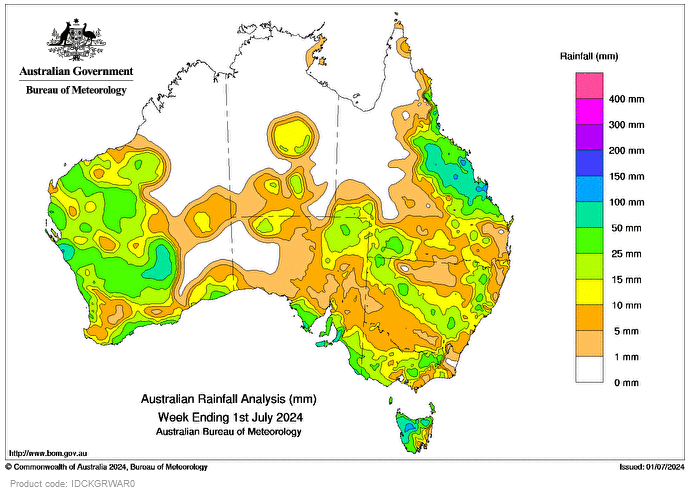
A recent cold front, driven by a low-pressure system off the south-west coast of Western Australia, has delivered substantial rainfall across much of the state. The system also pulled tropical moisture from the Coral Sea, which resulted in widespread showers and thunderstorms over central eastern Queensland. This weather pattern brought much-needed precipitation but also introduced challenges for local agricultural activities.
In Western Australia, weekly rainfall totals ranged between 25-50mm in many western regions. Central-eastern Queensland experienced more intense conditions, with areas recording 50-100mm of rainfall, and localized reports of more than 100mm in coastal regions. Mirani, just west of Mackay, recorded the highest weekly total of 180mm, while Melrose in the South Burnett region reported a daily high of 97mm.
Impacts on Agricultural Regions
The recent weather conditions have varied effects on different agricultural regions:
- Western Australia: The rainfall has been beneficial for crop development but also presents challenges for managing waterlogged fields and potential delays in harvest activities.
- Queensland: The record-breaking rains have bolstered soil moisture levels, which is positive for long-term crop growth, but may lead to temporary disruptions in planting schedules and increased risk of disease.
- South Australia, Victoria, Tasmania, and New South Wales: The cold front that moved through these regions brought beneficial rains, which are expected to support winter crops and improve overall soil moisture levels.
- North-West New South Wales and South-West Queensland: These areas received significant rainfall, which will aid in crop growth but could cause short-term operational challenges for farmers.
Implications for the Grain Market
The heavy rains are expected to influence several aspects of the grain market:
- Crop Yields: Increased soil moisture from the rainfall could enhance crop yields for the current season. However, excessive water might also cause issues such as soil erosion and fungal diseases, which need to be managed carefully.
- Market Prices: As weather conditions shift, they may lead to fluctuations in crop supply and demand. The increased precipitation might boost yields, potentially leading to lower prices if supply exceeds demand. Conversely, any resulting crop damage could tighten supplies and drive up prices.
- Future Weather Patterns: The patterns observed may set the stage for future weather events, including possible impacts on the El Niño/La Niña cycles, which in turn could affect global grain markets.
Looking Ahead
Farmers and investors should stay vigilant as they monitor ongoing weather conditions and adjust their strategies accordingly. The recent rains provide both opportunities for improved crop production and challenges that need to be addressed to avoid potential negative outcomes.
Error