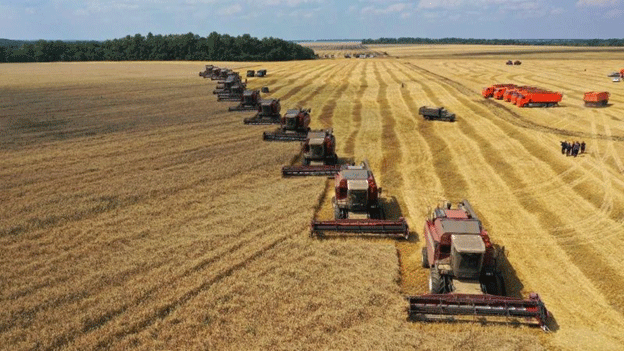
In 2024, Russia’s Chernozem region, known for its rich soil and agricultural productivity, faced a confluence of challenges that led to a significant decline in grain production. Weather anomalies, such as May frosts and prolonged summer droughts, compounded by geopolitical tensions, devastated crop yields across key agricultural sectors.
The numbers tell a stark story: total grain harvests dropped to 39.6 centners per hectare from 60.2 in 2023, with total production plummeting from 3.7 million tons to just 2.3 million tons in the Belgorod region. This marked the lowest yield in the past 12 years.
The Role of Weather and Climate
The spring of 2024 began disastrously, with two nights of frost in early May causing significant damage to crops. This was followed by an intense three-month drought during the summer and autumn. For instance, in the Belgorod region, perennial fruit and berry crops were affected across 3,300 hectares, while vegetable fields saw a loss of 310 hectares, amounting to over 9.4 million rubles in damages.
Sugar beet yields also suffered, dropping from 552 centners per hectare in 2023 to 352 in 2024. Overall, the Chernozem region’s farmers harvested 2 million tons of sugar beets, compared to 2.7 million tons the previous year.
Geopolitical and Economic Disruptions
In addition to weather-related challenges, political and military disruptions in the region further exacerbated the situation. For instance, in Belgorod, approximately 90,000 hectares of arable land were left fallow due to border tensions and drone attacks. Such disruptions have not only reduced arable land but also increased costs for farmers, who are struggling with rising debts and insufficient subsidies.
Adaptation and Future Prospects
Despite these difficulties, local governments and farmers have initiated adaptive strategies. These include diversifying crop selection to favor drought-resistant oilseeds like sunflowers and rapeseed. For example, Kursk and Voronezh regions have expanded their rapeseed cultivation areas, taking advantage of its higher market margins compared to traditional grains.
However, experts caution that these short-term solutions must be complemented by systemic changes. Increased investment in irrigation, restoration of crop rotation practices, and development of climate-resilient crop varieties are critical for sustaining agricultural productivity in the long term.
The challenges of 2024 highlight the vulnerabilities of agriculture in the Chernozem region amidst changing climate conditions and geopolitical instability. While government assistance and innovative farming practices offer hope, sustained effort and investment are needed to secure the future of one of Russia’s most important agricultural zones. The lessons of this year underscore the importance of resilience and adaptation in the face of uncertainty.
Error