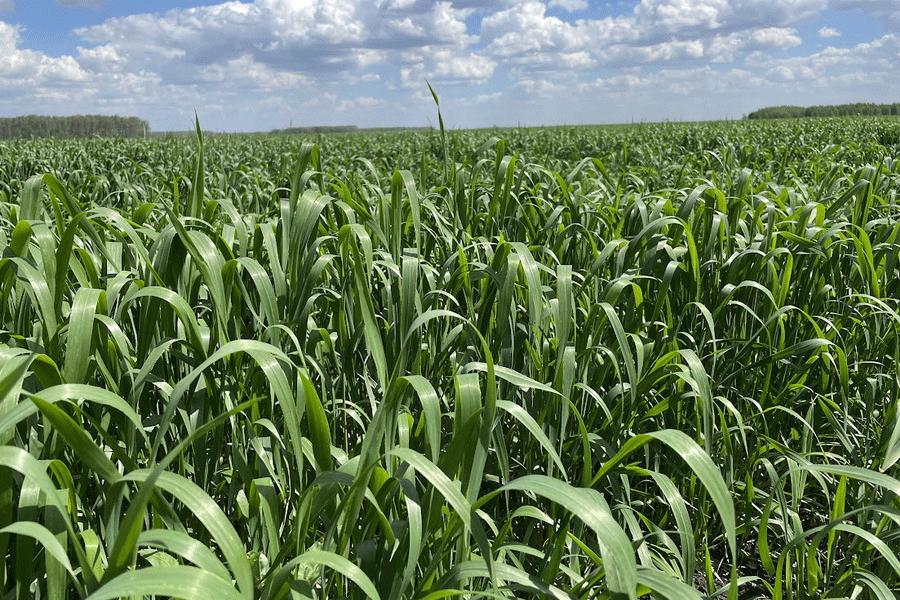
In a region known for its extreme winters, Hermes Agro, a farm in the Shal Akyn district of North Kazakhstan, took a risk in 2023 by sowing winter wheat for the first time. Starting with a modest 300-hectare test plot, the farm aimed to identify the best variety, refine agrotechnical practices, and assess winter survival rates. The experiment proved successful, yielding 30 centners per hectare (3.0 tons/ha) in July 2024, with grain quality meeting Class 3 standards. Encouraged by these results, the farm expanded winter wheat cultivation to 900 hectares in autumn 2024, and the crops have once again survived the winter well.
Why Winter Wheat? Key Benefits
Sergei Okunev, director of Hermes Agro, highlighted several advantages of winter wheat:
- Early Harvest & Cash Flow: Harvesting in July allows farmers to sell grain at higher prices before the main harvest season.
- Lower Risk: If winterkill occurs, farmers only lose seed and sowing costs, as fields can be replanted in spring.
- Efficient Resource Use: Early harvesting frees up machinery and labor before the peak season.
Diversification & Economic Stability
Hermes Agro manages 12,000 hectares, with a balanced crop rotation:
- 40% grains (including winter wheat)
- 40% oilseeds (rapeseed, flax)
- 20% legumes (lentils, peas, vetch)
This diversification enhances resilience against market and climate fluctuations.
Challenges: Early Sowing in 2025
Due to an unusually warm spring, Hermes Agro began sowing on May 10—earlier than their usual mid-May schedule. While the farm typically prefers mid-to-late sowing, this adjustment may lead to earlier maturation, though final yields remain to be seen.
A Promising Alternative for Northern Climates
The success of winter wheat in Northern Kazakhstan demonstrates its potential as a low-risk, high-reward crop, offering early income and logistical advantages. With proper variety selection and agronomic practices, farmers in similar climates could benefit from adopting this strategy.
Error