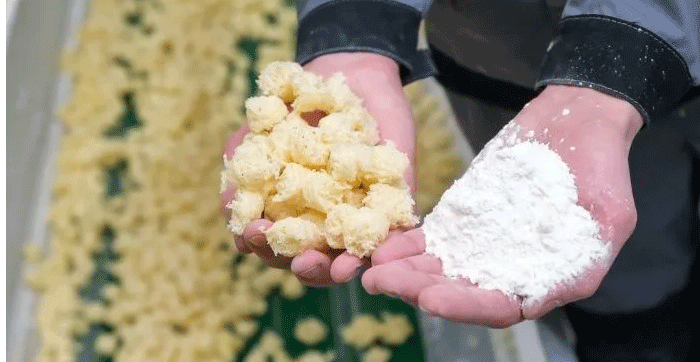
Deep grain processing transforms raw grain into high-value products like amino acids, modified starches, and biofuels, offering significantly higher profits than traditional milling. However, as highlighted by industry experts, this sector is “long, expensive, and complex” (Oleg Radin, President of the Soyuzkrakhmal Association).
Key Data on Deep Processing in Russia:
- Only 25 companies operate in this sector, with few new entrants due to high capital requirements (20+ billion rubles per project).
- Import dependence: Russia imports 100% of certain amino acids (excluding lysine), creating a major opportunity for domestic production.
- Export decline: In 2022, 30% of deep-processed products were exported, but by 2024, this dropped to just 11% due to higher domestic prices than global markets.
New and Delayed Projects in Southern Russia
1. Amirost’s Corn Processing Plant (Azov, Rostov Region)
- Investment: 34.6 billion rubles.
- Capacity: 1,250 tons of corn per day.
- Products: Modified food starches (currently 80,000–90,000 tons imported annually).
- Expected launch: 2026.
2. Roskhim’s Amino Acid Plant (Volgodonsk, Rostov Region)
- Investment: 34.6 billion rubles.
- Capacity: 250,000 tons/year.
- Delays: Started in 2010, frozen in 2018, resumed in 2023, now expected in 2027.
3. Rustark’s Modified Starch Plant (Krasnodar Krai)
- New focus: Starch from waxy corn (a newly developed Russian hybrid).
- Original plan: Citric acid and xanthan gum production (delayed due to market shifts).
4. Krasnodar Starch Plant (Krasnodar Krai)
- Investment: 45.5 billion rubles.
- Products: Starch, gluten, glucose, citric acid.
- Phased launch: First stage (mill) by 2027, full completion by 2029.
Market and Investment Barriers
- High risks: 12–15-year payback periods make projects unattractive to private investors.
- Price volatility: Citric acid prices halved in 5 years, affecting profitability.
- Regulatory hurdles: Land rezoning and permits cause delays (e.g., Krasnodar plant took over a year to secure industrial land).
Government Support: A Step Forward, But More Needed
The new “Technological Food Security” national project (2025) offers:
- Subsidized loans for deep-processing facilities.
- R&D cost reimbursements for enzyme and additive producers.
- Workforce training programs for the sector.
However, industry leaders argue for extended state support post-launch (first 2–3 years) to stabilize new enterprises, citing Belarus’ success with state-backed amino acid plants.
Can Russia Build a Competitive Deep Processing Industry?
While deep grain processing offers higher margins and import substitution potential, challenges remain:
✔ Massive upfront costs deter private investors.
✔ Long timelines (4–5 years minimum) increase risks.
✔ Export market fluctuations impact profitability.
Government incentives and guarantees could accelerate growth, but without sustained support, many projects may remain stuck in planning.
Error