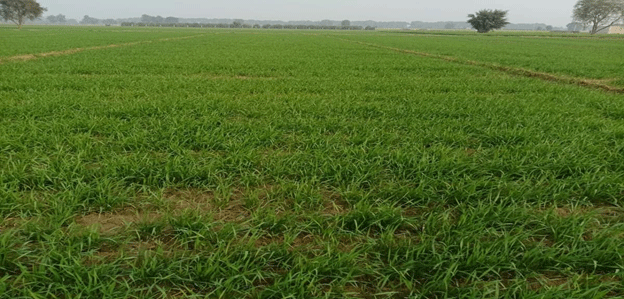
In the agriculturally rich region of Sri Ganganagar, which is known for producing some of the finest quality wheat in the state, the current agricultural season has brought mixed results. While the region has traditionally been a stronghold for wheat cultivation, this year, a shortage of irrigation water has significantly reduced the area under wheat sowing. As a result, many farmers have shifted their focus toward barley, a crop better suited to the limited water resources available.
Impact of Water Shortage on Wheat Sowing
Due to insufficient irrigation supplies from critical sources like the Indira Gandhi Nahar Project (IGNP), Bhakra Canal, and Ganganahar Canal, the wheat sowing target for the region has not been met. The wheat sowing target for the year was 525,000 hectares, but only 422,776 hectares were covered, marking a shortfall of about 20%. This decrease is particularly noticeable compared to the previous year, which saw 15,544 hectares less wheat sowing.
The irrigation water shortage is a key factor behind this decline, and it has made the cultivation of water-intensive crops like wheat less feasible for farmers. Consequently, wheat production in the region is expected to be lower, which could affect both the local and state-level supply.
Increased Interest in Barley Cultivation
The scarcity of water has led farmers to rethink their crop choices. Barley, which requires significantly less water compared to wheat, has seen an increase in cultivation. According to the agricultural department, barley has been sown across 138,284 hectares, exceeding the initial target by 13.35%. This marks an increase of 11,973 hectares over last year, signaling a positive shift in farmer preferences.
Dr. Milind Singh, a retired Deputy Director of Agriculture, explained that barley’s lower water requirements make it an attractive option for farmers facing irrigation challenges. This adaptability to drier conditions has positioned barley as a more viable crop for the region in the face of climate-induced water shortages.
Regional Breakdown of Sowing Areas
The sowing data from Sri Ganganagar district highlights the regional disparities:
- Sri Ganganagar district: 123,535 hectares
- Anupgarh: 93,021 hectares
- Hanumangarh: 206,220 hectares
In comparison, last year, wheat was sown across 221,120 hectares in Sri Ganganagar, 217,200 hectares in Hanumangarh, and 93,500 hectares in Anupgarh. This year’s lower sowing area in these districts is indicative of the challenges farmers are facing due to the water shortage.
What Experts Say
Dr. Satish Kumar Sharma, Additional Director of Agriculture in Sri Ganganagar, stated that the decrease in wheat sowing and the increase in barley sowing are directly related to the changing irrigation dynamics. Farmers have had to adapt to the reduced availability of water by prioritizing barley, which offers them a better chance of a successful harvest in these tough conditions.
Shifting Dynamics in Crop Cultivation
The reduction in wheat sowing in Sri Ganganagar is a direct consequence of ongoing irrigation water shortages, with farmers opting for more water-efficient crops like barley. While this shift may help mitigate immediate challenges, the long-term implications of reduced wheat production could affect the region’s contribution to the state’s agricultural output.
As the agricultural landscape continues to evolve due to climate and resource constraints, farmers may increasingly turn to crops like barley that are better suited to drier conditions, ensuring both sustainability and profitability. It remains essential for policymakers to address water management issues to support wheat production and other water-dependent crops in the region.
Error