Mallpur and Nalagarh Open for Wheat Procurement: A Supportive Start to the Rabi Marketing Season
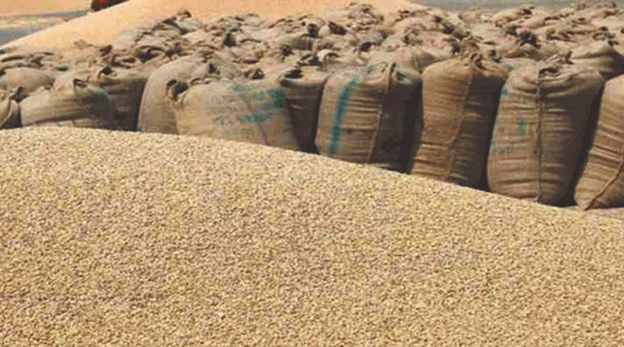
The 2025–26 Rabi wheat procurement season officially kicks off in Mallpur and Nalagarh sub-divisions of Himachal Pradesh, with the State Civil Supplies Corporation set to purchase up to 10,000 quintals of wheat directly from farmers. The procurement process, running from April 8 to June 15, aims to ensure timely payment, better facilities, and fair prices for farmers in the region.
This move comes as part of the state’s annual effort to stabilize grain markets, support food security, and ensure that smallholder farmers get the declared Minimum Support Price (MSP) without facing market exploitation.
MSP Hiked to Support Farmers
This season, the MSP for wheat has been increased to ₹2,425 per quintal, aligning with national trends aimed at improving rural incomes. This represents a significant rise compared to previous years (e.g., ₹2,125 in 2021–22), reflecting both inflation adjustments and the government’s commitment to strengthening the agriculture economy.
According to data from the Commission for Agricultural Costs and Prices (CACP), the cost of production for wheat in India is estimated at approximately ₹1,300–₹1,400 per quintal, meaning the new MSP offers over 70% margin above cost—a key benchmark for farmer profitability.
Improved Infrastructure at Procurement Centers
To ensure smooth operations, two major procurement centers have been set up:
- Mallpur Procurement Centre
- Nalagarh Regulated Market (Upmandi)
Facilities at both centers have been significantly upgraded to improve farmer experience, including:
- Shaded resting rooms with fans
- RO water coolers for clean drinking water
- Toilets to ensure hygiene and comfort
- Staff assistance for documentation and handling logistics
District Civil Supplies Controller Shravan Kumar confirmed that all logistical arrangements are in place and that farmers will be provided with full assistance to avoid delays or discomfort during the procurement process.
A Model for Farmer-Centric Procurement
Such initiatives are part of a broader effort to modernize India’s agricultural marketing system. By bringing procurement closer to rural communities and improving transparency, states like Himachal Pradesh are reducing transportation burdens, minimizing middlemen, and ensuring prompt payments directly into farmers’ bank accounts.
According to the Food Corporation of India (FCI), wheat procurement nationwide during Rabi 2024–25 stood at 262 lakh tonnes, a figure expected to rise in the current season due to improved yield prospects and higher MSP.
The wheat procurement launch in Mallpur and Nalagarh is more than just a seasonal activity—it’s a vital part of ensuring that farmers are rewarded fairly for their hard work. With higher MSPs and farmer-friendly facilities, this initiative stands as a model of inclusive, accessible agricultural policy that strengthens the backbone of India’s food system.
Error