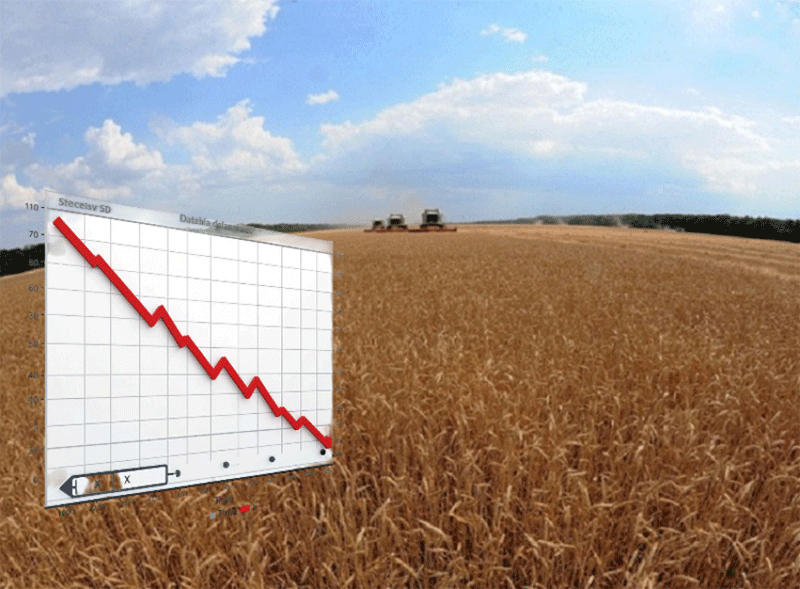
Farmers in Russia’s Voronezh Oblast, a key grain-producing region, are facing a financial crisis as wheat cultivation has turned from modestly profitable to deeply unprofitable in just one year. According to Nikita Tokmakov, head of the Association of Peasant (Farm) Holdings of Voronezh Oblast, farmers earned 446 rubles per ton in 2023 but are now losing 1,099 rubles per ton—a 244% drop in profitability.
What’s Driving the Losses?
- Export Duties Cutting into Margins
- The current wheat export duty (recently adjusted but still high) is erasing any potential profit, with Tokmakov stating it exceeds the losses farmers incur.
- The Russian Grain Union is pushing for duty abolition, arguing it stifles production.
- Dramatic Yield Collapse Due to Weather
- 2023 yield: 48.5 centners/hectare (~4.85 tons/ha)
- 2024 yield: 26.8 centners/hectare (~2.68 tons/ha) – a 45% drop due to poor weather conditions.
- Lower volumes mean higher per-unit costs, compounding financial strain.
- Government Response: Will Duties Be Adjusted?
- After farmer advocacy, the Ministry of Agriculture is considering revising grain export duty calculations.
- However, no concrete relief measures have been announced yet.
Broader Implications for Russian Agriculture
- Risk of Reduced Planting: If losses persist, farmers may shift to more profitable crops, threatening Russia’s wheat export dominance.
- Policy Tensions: The government must balance revenue from export taxes with support for struggling farmers.
A Breaking Point for Wheat Farmers?
Voronezh’s crisis highlights the fragility of grain profitability under current policies and climate challenges. Without duty reforms or subsidies, Russia risks losing small and mid-sized wheat producers—potentially disrupting long-term food security and export capacity.
Error