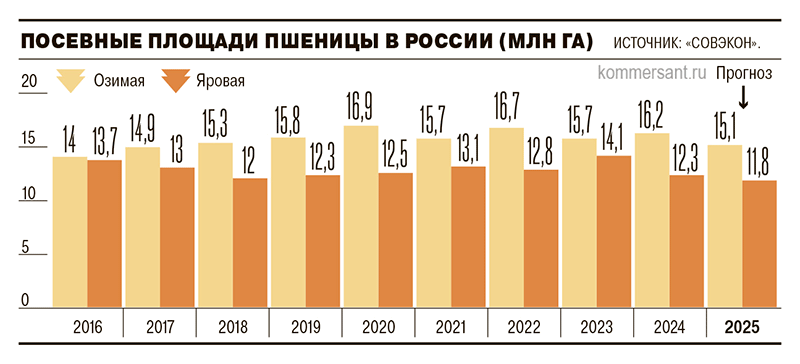
Russia, one of the world’s top wheat exporters, is witnessing a significant decline in spring wheat cultivation. According to SovEcon, the planted area may drop by 4.1% year-on-year (YoY) to 11.8 million hectares (ha)—the smallest in at least ten years. Other analysts, like Albina Koryagina from Neo, predict an even steeper decline of 5.7% (to 11.6 million ha), while Dmitry Rylko of the Institute for Agricultural Market Studies (IKAR) estimates a reduction of over 1 million ha, down to 11.5 million ha, potentially marking a multi-decade low.
As of June 11, only 11.1 million ha had been sown—10.5% less than 2023—due to delayed planting in eastern regions caused by heavy rains.
Why Farmers Are Abandoning Wheat
The shift away from wheat is driven by:
- Low Profitability: Wheat prices (12,000–14,000 RUB/ton) hover near production costs, requiring 18,000–20,000 RUB/ton to ensure margins. Current profitability in key regions like the Volga and Central Russia is a meager 0–0.5%.
- Rising Input Costs: Fuel, fertilizer, and seed prices have surged by 20% YoY, squeezing margins further.
- Export Restrictions: Quotas and floating export duties reduce revenue from international sales.
- Weather Risks: Droughts in southern regions (e.g., Krasnodar, Rostov) and spring frosts have damaged crops, prompting some areas to declare a state of emergency.
The Rise of Oilseeds and Legumes
Farmers are pivoting to higher-margin alternatives:
- Sunflower: 20–30% profitability (though regulated by the government).
- Rapeseed and Soybeans: 15–25% profitability.
- Peas, Chickpeas, and Lentils: Up to 30% profitability.
Siberia and the Urals have seen the sharpest wheat declines (−700,000 ha and −300,000 ha, respectively), with acreage shifting toward crops like rapeseed, driven by growing Chinese demand and logistical advantages.
Winter Wheat Also Under Pressure
Winter wheat areas fell by 6.8% YoY to 15.1 million ha, with 6.8% of sown crops lost. Total wheat area (spring + winter) is expected to drop to 27–28 million ha (vs. 28.5 million ha in 2023), the lowest since 2018/19.
Yield Optimism Amid Uncertainty
Despite shrinking acreage, analysts project a 2024 wheat harvest of 80.1–90 million tons (vs. 82.6 million tons in 2023), assuming improved yields (2.82–3.0 tons/ha vs. 2.86 tons/ha in 2023). However, droughts could slash yields by 10–15%, and comparisons to 2023’s 30% harvest decline may skew optimism.
A Structural Shift in Russian Agriculture
Russia’s wheat sector faces declining competitiveness due to climate, policy, and market pressures. While oilseeds and legumes offer short-term gains, long-term food security and export stability may require policy adjustments and investment in climate-resilient wheat varieties. Farmers must weigh risks carefully—2024’s harvest remains a gamble on weather and global prices.
Error