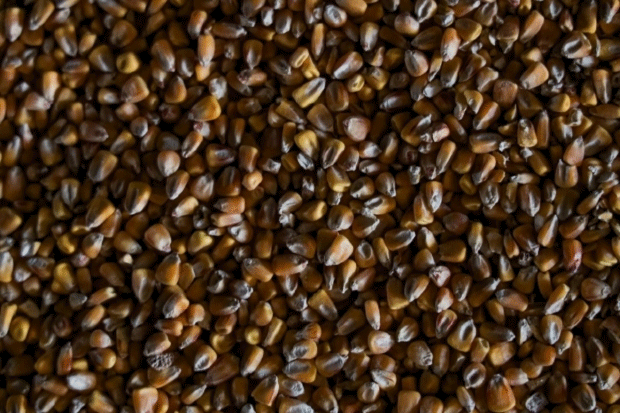
Recent inspections by Rosselkhoznadzor in Volgograd Oblast uncovered the sale of unregistered corn seeds through an online store. Two varieties of corn seeds were found outside the State Register of Approved Agricultural Plant Varieties, signaling potential legal and agronomic risks.
Why Should Farmers Care?
- Yield and Quality Risks – Unregistered seeds lack verified performance data. Studies show that uncertified seeds can reduce yields by 15-30% due to poor germination, disease susceptibility, or inadequate adaptation to local conditions (FAO, 2023).
- Legal Consequences – Selling or using unapproved seeds violates Russian agricultural laws, leading to fines or confiscation of harvests.
- Biosecurity Threats – Non-certified seeds may carry pests or pathogens. The European Plant Protection Organization (EPPO) reports that 12% of crop failures in recent years were linked to uncertified planting material.
Global and Local Trends in Seed Regulation
- The global seed market is projected to reach $90 billion by 2027, with strict certification ensuring quality (Allied Market Research, 2024).
- In Russia, over 98% of commercial farms rely on registered seeds to guarantee stable production (Ministry of Agriculture, 2023).
Farmers and agribusinesses must verify seed certification before purchase to avoid financial losses and legal issues. Strengthening oversight and farmer education on seed compliance is crucial for sustainable agriculture.
Error