• About
  • Advertise
  • Careers
  • Contact
Thursday, December 4, 2025
  • Login
No Result
View All Result
Field Crops news
  • Home
  • News
  • AgroTech & Innovation
  • Science
  • Sustainability
  • Market News
  • Research & Development
  • Home
  • News
  • AgroTech & Innovation
  • Science
  • Sustainability
  • Market News
  • Research & Development
No Result
View All Result
Field Crops news
No Result
View All Result
Home News

Unlocking Oat Oil Secrets: How Science is Revolutionizing Oat Milling and Breeding

by Tatiana Ivanova
5 August 2025
in News, Processed
0
Unlocking Oat Oil Secrets: How Science is Revolutionizing Oat Milling and Breeding
0
SHARES
2
VIEWS
Share on FacebookShare on Twitter

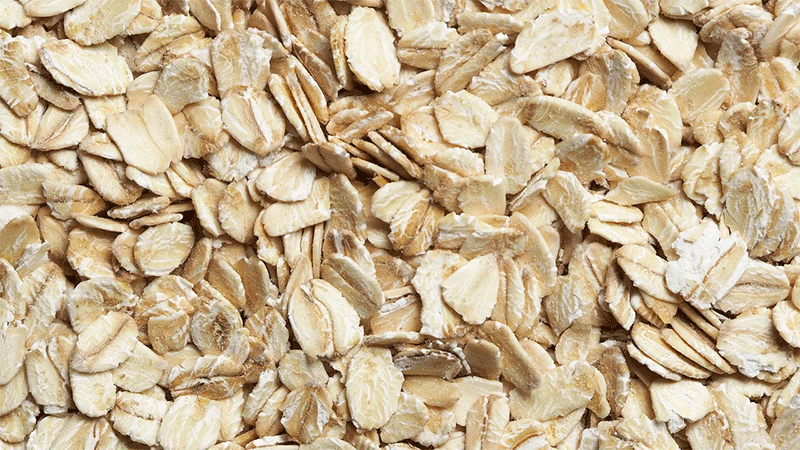
Oats are a staple crop with growing demand, especially in plant-based foods and healthy products. However, high oil content in oat grains has long been a challenge for millers, reducing processing efficiency and limiting innovation in oat-based products like flour and protein alternatives. Now, groundbreaking research from the University of South Australia (UniSA), the South Australian Research and Development Institute (SARDI), and the University of Adelaide is uncovering how oats produce oil—a discovery that could transform oat breeding and processing.

The Oil Problem in Oat Milling

Australia is the world’s second-largest oat exporter, but high oil levels in grains cause sticking and clogging in mills, reducing yield and increasing costs. Unlike other cereals, oats store oil in their endosperm (the starchy part), making extraction difficult. This not only affects milling but also shortens the shelf life of oat products due to oil oxidation.

How Science is Decoding Oat Oil Production

Using spatial imaging, researchers tracked oil accumulation in two modern oat varieties during grain development. They then applied lipidomics and proteomics—advanced techniques that analyze fats and proteins—to identify key biological pathways involved in oil synthesis.

The findings reveal:

  • Specific enzymes and proteins that drive oil production in oats.
  • Genetic markers that could help breeders develop low-oil oat varieties naturally.
  • Potential for improved milling yields and higher-quality oat flour for food manufacturers.

Implications for Farmers and the Oat Industry

This research opens doors for:

  • Higher-value oat products (e.g., stable oat flour, extended-shelf-life foods).
  • Better milling efficiency, reducing waste and costs.
  • New breeding targets to develop oats optimized for different markets.

Understanding the biological triggers of oil production in oats is a game-changer for the industry. By leveraging these insights, breeders can develop low-oil oat varieties, enhancing milling performance and expanding opportunities in plant-based foods. For farmers, this means more market options; for processors, higher efficiency; and for consumers, better oat-based products.

Error

Tags: Agricultural Sciencecrop improvemengrain processinglipidomicsOat Breedingoat millingoatsoil synthesisplant-based proteinsproteomicsSARDIUniSA

Tatiana Ivanova

Next Post
Breakthrough in Oat Cultivation: HAU’s New High-Yield Varieties Promise Better Forage and Higher Profits

Breakthrough in Oat Cultivation: HAU’s New High-Yield Varieties Promise Better Forage and Higher Profits

Newsletter

The Unseen Harvest Hazard: Managing the Rising Threat of Corn Stubble Fires

The Unseen Harvest Hazard: Managing the Rising Threat of Corn Stubble Fires

21 October 2025

Accelerating Wheat Planting: How Technology is Powering Bumper Harvests in Yicheng

3 November 2024

Winter Wheat in Northern Kazakhstan: A Bold Experiment Pays Off with 30% Higher Yields

27 June 2025

Declining Wheat Exports: What the 2024 December Forecast Means for Russian Agriculture

23 December 2024

Australian Grain Market Update: Price Dynamics and Seasonal Shifts

23 June 2024

Egypt’s New Wheat Procurement Mechanism: Challenges for Traders and Market Transparency

21 January 2025

South Korea’s Rice Area Reduction Plan: Balancing Supply and Farmer Incentives

26 November 2024

Mafia’s Fiery Warning: 50 Acres of Organic Wheat Torched on Confiscated Land in Sicilian Showdown

7 August 2025

Field Day in Ussuriysk: 67 High-Yield Corn Hybrids and 50 Soybean Varieties Take Center Stage

3 August 2025

Perennial Wheat: A Sustainable Alternative to Annual Crops with Promising Environmental Benefits

22 September 2024
  • About
  • Advertise
  • Careers
  • Contact
Call us: +51 93 999 5140

© 2020-2024 Field Crops news

Welcome Back!

Login to your account below

Forgotten Password?

Retrieve your password

Please enter your username or email address to reset your password.

Log In
No Result
View All Result
  • Home
  • News
  • Science
  • Sustainability
  • AgroTech & Innovation
  • Market News
  • Science
  • Research & Development
  • About
  • Contact

© 2020-2024 Field Crops news