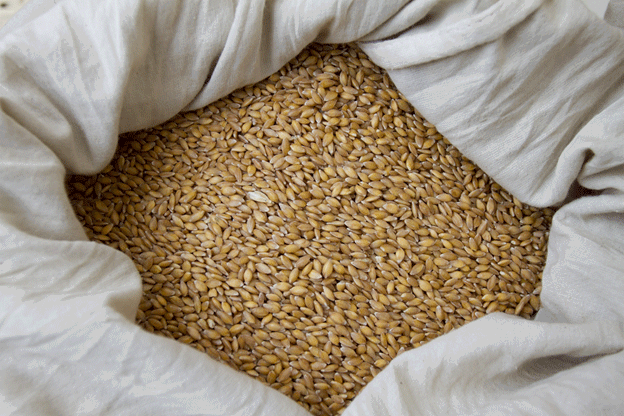
In a groundbreaking development, researchers from South Ural State University (SUSU) in Chelyabinsk are pioneering a novel technique to convert spoiled wheat into bioethanol, a promising form of biofuel. This method leverages ultrasonic waves to enhance the extraction of bioethanol from wheat that is no longer suitable for food production.
Ultrasonic Technology in Biofuel Production
Recent innovations from the Department of Food and Biotechnology at SUSU have led to the creation of a new process for converting sprouted wheat into bioethanol. According to Artem Malinin, a PhD student leading the project, the ultrasonic method increases the yield of bioethanol from the raw material and improves its physical and chemical properties.
How Does It Work?
Ultrasonic waves are used to treat the sprouted wheat, which accelerates the fermentation process and enhances the efficiency of bioethanol production. This technique not only speeds up the production cycle but also optimizes the quality of the bioethanol produced. The basic process involves:
- Preparation of Spoiled Wheat: Wheat grains, which have sprouted due to rain during the 2023 harvest, are used as the raw material. This sprouted wheat is not suitable for food production due to potential contamination by harmful molds.
- Ultrasonic Treatment: The wheat is subjected to ultrasonic waves, which break down the starches more effectively than traditional methods. This results in a higher yield of bioethanol during the fermentation process.
- Fermentation and Distillation: The treated wheat undergoes alcoholic fermentation, followed by distillation to separate the ethanol from the fermentation mixture.
This process converts what would otherwise be wasted into a valuable fuel source, demonstrating an innovative approach to waste management and biofuel production.
Current Status and Future Research
The technology developed at SUSU is currently undergoing further testing and optimization. Researchers are exploring additional applications of ultrasonic and plasma treatments at various stages of the biotechnological process. These advancements aim to refine the production method and explore other potential uses for the technology.
Market Implications and Benefits
The ability to turn spoiled wheat into bioethanol presents several benefits for the agricultural and energy sectors:
- Waste Reduction: This technology provides a solution for dealing with wheat that cannot be used for food due to spoilage, thus reducing agricultural waste.
- Sustainable Fuel Source: Bioethanol is a renewable energy source that can help reduce dependence on fossil fuels and lower greenhouse gas emissions.
- Economic Opportunities: By converting wasted grain into biofuel, this method creates new economic opportunities and supports the biofuel industry’s growth.
South Ural State University’s innovative use of ultrasonic technology to convert spoiled wheat into bioethanol represents a significant advancement in both waste management and biofuel production. This approach not only addresses the challenges posed by the 2023 wheat harvest but also offers a sustainable solution for the agricultural and energy sectors. As the technology progresses through further testing and research, it has the potential to make a substantial impact on the biofuel industry and beyond.
Error