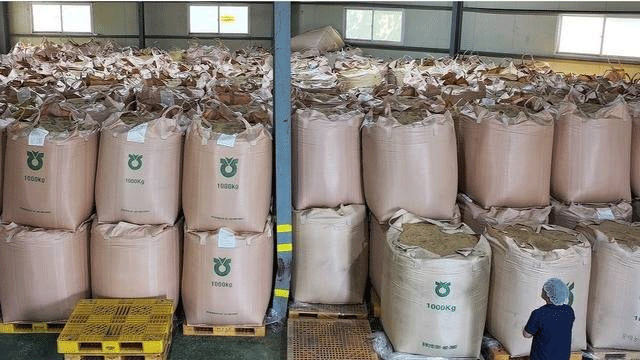
A perfect storm of policy, production, and weather is driving a significant and persistent surge in the price of rice, South Korea’s staple grain. Recent data from September 2025 reveals alarming year-on-year price increases of 19.6% in Daegu and 15.8% in North Gyeongsang Province, pushing the average national retail price for a 20kg bag to a record 68,435 KRW. Despite government intervention, including the release of 55,000 tonnes of public grain reserves, the market’s upward trajectory remains unbroken, pointing to deeper structural issues within the domestic rice sector.
The Data: A Market at a Multi-Year High
The current price levels are not just high; they are historically elevated. The national average of 68,435 KRW per 20kg is 25% above the average price and a staggering 29.17% higher than just one year ago. This inflationary trend is consistent across major urban centers, with specific retail prices reaching 69,720 KRW in Daegu and 68,000 KRW in Pohang. These figures have decisively broken through the psychological consumer barrier of 60,000 KRW, indicating a new pricing paradigm.
Root Causes: A Confluence of Policy, Area, and Weather
Analysts and the provided text point to three primary, interconnected drivers:
- Policy-Induced Inventory Drawdown: The government’s “rice isolation measures” in 2024 are cited as a key trigger. This policy, likely aimed at managing public stockpiles, is now criticized for being excessive, leading to a sharp reduction in commercial rice inventories and removing a crucial buffer against price shocks.
- Historic Decline in Cultivation Area: The most concerning long-term factor is the continued contraction of land dedicated to rice. According to Statistics Korea, the national rice cultivation area for 2025 has fallen to 678,000 hectares, a 2.9% decrease from the previous year and the smallest area on record. This represents a 32% reduction compared to just two decades ago, a clear indicator of a sustained structural shift away from rice farming.
- Adverse Weather Delays: The 2025 harvest was further compromised by frequent rains during the early-harvest variety season, delaying shipments and tightening short-term supply just as inventories were low.
Contrasting Outlooks: Temporary Relief vs. Structural Deficit
The government maintains a cautiously optimistic outlook. The Ministry of Agriculture, Food and Rural Affairs anticipates that prices will stabilize in mid-October with the main harvest, projecting that the total 2025 supply will exceed demand by 165,000 tonnes.
However, this official forecast is challenged by the stark reality of the shrinking harvest area. With this year’s expected production projected to be 0.3% lower than 2024’s already diminished output, many experts worry that the supply cushion is thinner than officially stated. The relentless decline in cultivation area suggests that the era of chronic surplus may be ending, giving way to a tighter, more volatile market.
The current rice price inflation in South Korea is more than a temporary market anomaly. It is a symptom of a sector undergoing a fundamental transformation. While government releases and the upcoming main harvest may provide short-term relief, the long-term trend is concerning. The relentless contraction of rice farmland is the single greatest threat to price stability. For farmers, this may present short-term income gains but raises questions about long-term production viability. For policymakers, agronomists, and the food industry, the situation is a clear signal that strategies must evolve beyond annual stock management. A renewed focus on enhancing farm-level productivity, supporting farmer profitability to maintain cultivation areas, and developing a more flexible, data-driven approach to national food security is urgently needed to navigate this new, more expensive reality for South Korea’s most important staple.
Error