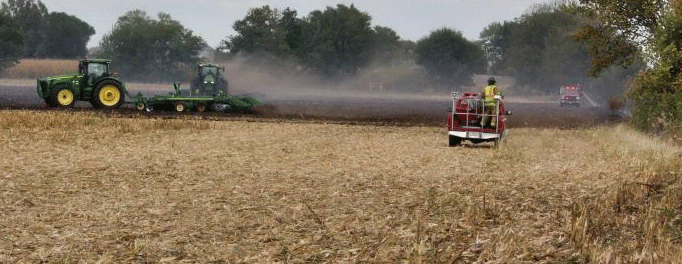
This past Saturday, a swift response by the Marquette and Aurora fire departments, aided by at least six local farmers with tractors and disks, prevented a corn stubble fire in Nebraska from escalating into a catastrophic event. The fire, driven by strong northwest winds, burned a recently harvested field along County Road 19. While the quick action limited the damage, the incident serves as a stark reminder of the ever-present fire risk that accompanies the harvest season.
The fact that the field had been harvested just the day prior is a key detail. Freshly harvested fields are tinderboxes, with dry, combustible residue spread evenly across the ground. This material, known as stubble, has a low moisture content and ignites easily from a single spark. When combined with the low relative humidity and high winds typical of autumn cold fronts—exactly the conditions reported—the potential for rapid, uncontrollable spread is immense.
The Data Behind the Danger
The threat is not isolated. A 2022 analysis by the National Fire Protection Association (NFPA) underscores that vegetation and crop fires, including stubble fires, account for a significant portion of reported outdoor fires annually. Furthermore, research from the University of Nebraska-Lincoln Extension indicates that the economic impact extends far beyond the lost residue. A single stubble fire can cause:
- Destruction of Soil Biology: The intense heat annihilates vital soil microbes and organic matter, undermining years of soil health management.
- Nutrient Volatilization: Essential nutrients like nitrogen and sulfur are lost to the atmosphere.
- Equipment and Crop Loss: The fire can spread to adjacent unharvested fields, storage structures, and farm equipment, resulting in devastating financial losses.
The successful use of disks by farmers in this incident is a proven tactic, creating firebreaks by turning soil over to expose a non-combustible barrier. This collaboration between farmers and firefighters is a best-practice model for rural communities.
Proactive Prevention in a Changing Climate
With the cause of the blaze still unknown, it’s a crucial moment to review common ignition sources. These can include overheated machinery bearings, electrical faults in combines, catalytic converters, and even carelessly discarded smoking materials. In an era of increasingly erratic weather patterns and prolonged dry spells, the window of high fire danger is widening. Proactive management, such as ensuring farm machinery is clean and well-maintained, having water trucks or disks on standby during harvest, and monitoring weather forecasts for red flag warnings, is no longer just prudent—it’s essential for risk management.
The Marquette fire is a successful story of community response, but it should also be a wake-up call. Corn stubble is a significant and underestimated fuel source. As harvest continues across the country, integrating fire prevention into the harvest protocol is paramount. This involves a combination of technology (e.g., infrared scanners on equipment to detect hot bearings), vigilant maintenance, and community-wide preparedness plans. For today’s agricultural professional, managing fire risk is as important as managing soil fertility or pest pressure—a non-negotiable component of a sustainable and profitable operation.
Error