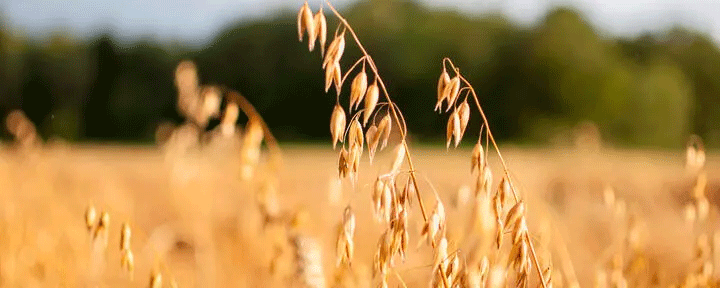
Farmers in Germany are planting more oats than ever before. According to data from the Federal Statistical Office (Destatis), oat cultivation reached 183,300 hectares in 2025, marking an 18% increase compared to 2024 and a 30% jump since 2023. This makes oats the only summer cereal showing consistent growth in acreage.
The Association of Cereal, Mill, and Starch Industries (VGMS) attributes this trend to rising consumer demand for oat-based products, such as plant-based milk and healthy snacks. Ulrich Schumacher, a spokesperson for VGMS, highlights that the “Oat Cultivation Initiative,” launched in 2019, has successfully encouraged farmers to expand production.
Regional Market Expansion
German mills are processing 700,000 tons of oats in 2024, a 140% increase since 2008. Schumacher notes that mills increasingly prefer locally sourced oats, reducing dependence on imports and supporting domestic agriculture. This shift aligns with consumer preferences for sustainable and regional food products.
Agronomic and Economic Benefits of Oats
Oats are a low-input crop, requiring less fertilizer and pesticides compared to other cereals. They also:
- Improve soil structure through their extensive root system.
- Reduce disease pressure in crop rotations, benefiting subsequent crops like wheat or barley.
- Offer attractive profit margins due to lower production costs and strong market demand.
“Oats fit perfectly into modern crop rotations—both ecologically and economically,” says Schumacher.
The expansion of oat cultivation in Germany reflects a broader shift toward sustainable and profitable farming. With strong market demand, agronomic advantages, and support from industry initiatives, oats present a viable opportunity for farmers, agronomists, and agricultural businesses looking to diversify and enhance sustainability.
Error