

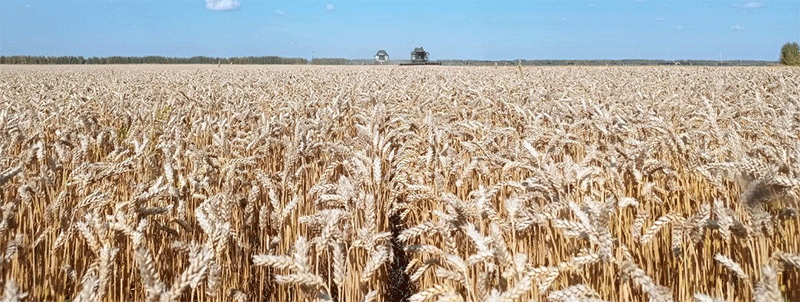
In a candid interview, Alexander Klochkov, one of the largest farmers in Russia’s Omsk Oblast, paints a stark picture of the current agricultural climate. Despite achieving impressive wheat yields of over 45 centners per hectare—more than double the regional average of 20 centners—Klochkov describes an industry on the brink. The central conflict is a brutal economic squeeze: record harvests are met with plummeting prices, while the cost of production skyrockets.
The numbers are alarming. Klochkov reports that grain prices have fallen to 8,500 – 12,000 RUB per ton, a figure he calls unprecedentedly low. For context, wheat was priced at 15,000 RUB/ton four years ago. This decline is not isolated; pea prices have also dropped from 20,000 RUB/ton to 13,000 RUB/ton. This price collapse occurs against a backdrop of rampant inflation for inputs. Klochkov notes that a high-performance sprayer that cost 22 million RUB in 2022 now costs 38 million RUB. Similarly, diesel fuel has risen from 15 RUB/liter to 72 RUB/liter over 13 years, while grain prices have fallen. This creates a devastating math problem: where three years ago selling 1,000 tons of grain could buy a combine, today it requires 2,000-3,000 tons.
Faced with this pressure, Klochkov’s farm is undergoing a strategic shift. With a potential ban on imported wheat varieties threatening the high-yielding English genetics he relies on, he is actively diversifying. The farm has already reduced wheat acreage in its crop rotation and is moving into more marginal crops like seeds for forage grasses—melilot and brome grass—which have stable export demand to Belarus and Kazakhstan. Plans are underway to trial alfalfa seed production. This move away from staple grains due to price volatility is a trend noted in a recent OECD-FAO Agricultural Outlook, which highlights how farmers globally are adapting to market signals by shifting to higher-value or more resilient crops.
Compounding the economic challenge is a severe personnel crisis. Klochkov states there is a catastrophic shortage of qualified technicians and operators, despite offering competitive wages. This skills gap threatens the ability to operate increasingly complex and expensive machinery. Furthermore, ventures like dairy farming, while profitable, are deemed nearly impossible due to the immense capital investment required and the same critical lack of specialized staff like veterinarians and zootechnicians.
The situation described by Alexander Klochkov is a powerful microcosm of challenges facing progressive farmers worldwide. The pursuit of higher yields through advanced genetics and technology is being undermined by a cost-price squeeze that threatens long-term sustainability. The path forward, as demonstrated by Klochkov’s farm, involves a multi-pronged survival strategy: drastic operational efficiency through high-capacity machinery, strategic diversification into niche crops, and heavy investment in on-farm storage and processing infrastructure to avoid costly external services. Ultimately, this interview underscores that agricultural success is no longer just about what you can grow, but about navigating an incredibly complex and often hostile economic landscape.
Error



