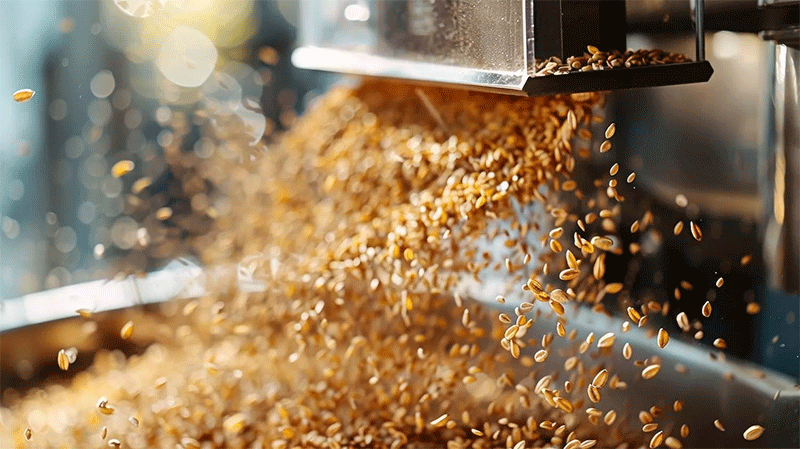
In late October, a political firestorm erupted when Moroccan MP Ahmed Touizi publicly accused certain flour mills of “grinding paper” and misappropriating an estimated 16 billion dirhams in state subsidies. While these explosive claims triggered widespread media and political outrage, they primarily illuminated a sector already under judicial investigation. The scandal transformed national soft wheat flour—a staple commodity central to the country’s food security—into a national debate over transparency and governance.
However, the sector’s malaise runs much deeper than a single alleged fraud. Long before this controversy, Morocco’s Competition Council had independently launched a study into the milling market. Their focus identifies core vulnerabilities that extend far beyond potential criminality. The sector suffers from a structural dependency on wheat imports, making it acutely sensitive to global price volatility and supply chain disruptions. This is compounded by chronic overcapacity, where too many mills compete for a finite supply of grain, eroding profitability and efficiency. Furthermore, the market remains highly fragmented, hindering economies of scale and modernization. Underpinning these issues is an outdated state subsidy mechanism that has remained largely unchanged for decades, creating perverse incentives and opportunities for exploitation rather than promoting a efficient, competitive, and transparent market.
Globally, the situation in Morocco reflects a challenge faced by many nations reliant on cereal imports: designing subsidy systems that support both consumers and a sustainable agricultural processing sector without fostering dependency or corruption. International best practices point towards targeted, transparent support, investment in supply chain efficiency, and regulatory frameworks that encourage fair competition and innovation.
The Moroccan milling scandal is not an isolated incident but a critical symptom of systemic failure. Addressing it requires moving beyond punishing bad actors to undertaking fundamental structural reform. The path forward must involve modernizing subsidy mechanisms to be transparent and data-driven, rationalizing production capacity to match real needs, and fostering a more consolidated and professional market. For farmers, this means a more stable and predictable offtake for their grain; for agronomists and engineers, it signals a need for efficiency-focused solutions; and for the nation, it is a necessary step toward building a more resilient and secure food system. Rebuilding trust and efficiency in this vital sector is not just an economic imperative but a cornerstone of national stability.
Error