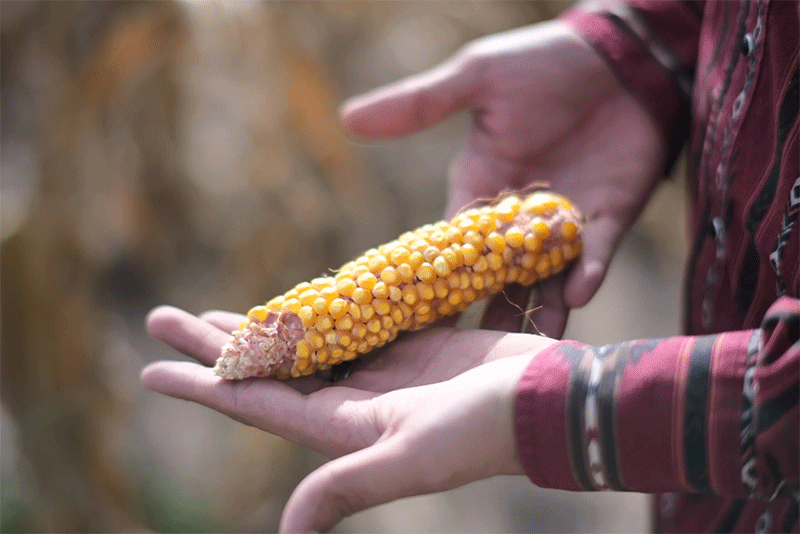
In Western Kansas, the vast expanses of corn are a testament to a powerful, self-reinforcing agricultural system. This region plants over 6 million acres of corn, primarily a starchy field corn variety destined not for human consumption, but as high-energy feed for the cattle industry and as a feedstock for ethanol production. The economic infrastructure—from trucking jobs to feedlots and processing plants—is deeply intertwined with this single crop. As truck driver Isaac Yara illustrates, the grain’s journey often bypasses local markets, creating a “southward flow” from Kansas and even from the traditional Corn Belt states like Nebraska and Iowa down to massive feedlots in the Texas Panhandle. This system is heavily supported by federal policy; since 1995, corn has been the most subsidized crop in the U.S., with over $21 billion in government payments, a figure that dwarfs support for other commodities and creates a powerful economic incentive to maintain the status quo.
However, this corn-centric model faces a critical existential threat: its dependence on the Ogallala Aquifer. The aquifer, one of the world’s largest, is a finite resource that has been severely depleted by decades of irrigation. A 2023 study from Kansas State University confirmed that the aquifer’s decline continues largely unabated, with some areas seeing water levels drop by more than 50 feet since widespread irrigation began. While improved corn hybrids have been developed for drier conditions, they still rely on this unsustainable water source to thrive in the semi-arid High Plains. The economic pressure to grow corn is so immense that it often overrides long-term resource management. As noted by Texas A&M economist Mark Welch, the “return possibilities for corn are pretty attractive,” creating a powerful short-term logic for farmers, even as they draw down the very resource their future depends upon.
The situation in Western Kansas represents a classic case of agricultural lock-in, where short-term economic viability is pitted against long-term environmental sustainability. The deeply entrenched infrastructure, market demand, and federal subsidy structure make transitioning away from corn a monumental challenge. For farmers, agronomists, and policymakers, the path forward requires a multi-faceted approach: accelerating the development and adoption of less water-intensive crops, investing in precision irrigation to maximize every gallon, and critically re-evaluating subsidy programs to incentivize water conservation over water-intensive production. The future of agriculture in the High Plains depends on breaking the cycle before the aquifer—and the economy built upon it—is no longer able to support it.
Error