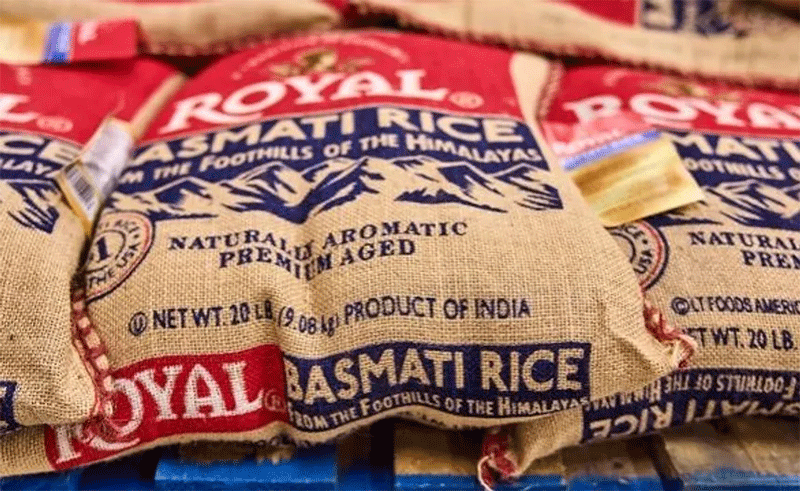
For centuries, “Basmati” has been synonymous with the unique, aromatic long-grain rice cultivated at the foothills of the Himalayas. Today, this name sits at the center of a complex geopolitical and economic storm that threatens to derail a major free trade agreement (FTA) between India and the European Union, a negotiation ongoing since 2007. The core issue is a fight for a Protected Geographical Indication (PGI) status, a designation that protects agricultural products based on their specific regional origin and terroir.
The Stakes: Premium Prices and Market Access
The economic incentive for this battle is clear. Authentic Basmati rice commands a significant premium in the global market, selling for $200-$300 more per ton than standard varieties. For India, which according to the Agricultural and Processed Food Products Export Development Authority (APEDA) exported over 4.5 million metric tons of Basmati in 2023-24, this premium represents a multi-billion dollar industry. The EU is a critical market, and securing PGI status would legally prevent other producers from using the “Basmati” name within the bloc, safeguarding this premium and protecting consumer authenticity.
A Conflict Rooted in Terroir and Territory
India applied for PGI status in the EU back in 2018, asserting that the name “Basmati” should be exclusive to rice grown in its recognized northern territories. However, in 2023, Pakistan filed a competing application, seeking to include four districts within the disputed Kashmir region. This move transformed an agricultural issue into a diplomatic minefield.
The European Commission, which oversees PGI designations, now faces an impossible choice. Granting India’s claim would ignore Pakistan’s historic role as a Basmati producer. Approving Pakistan’s application, which includes contested areas, could be viewed as a de facto recognition of its territorial claims, a move that would infuriate New Delhi and likely scuttle the broader FTA talks. The EU has acknowledged the “delicate nature” of these applications.
Broader Implications for Agricultural Trade
This dispute highlights the growing importance of Geographical Indications in global agricultural trade. For farmers and agronomists, a PGI is the ultimate recognition of a product’s unique link to its local soil, climate, and traditional knowledge—its terroir. It protects against imitation and adds value. However, as this case shows, when production zones span political borders, the process becomes fraught with difficulty.
The ongoing FTA negotiations, reinvigorated in 2022, are a strategic priority for both sides. A potential deal by the end of 2025 could significantly reduce tariffs and increase market access for a wide range of goods. Yet, the Basmati issue has become a symbolic sticking point, demonstrating how agricultural products are deeply entangled in issues of national identity and geopolitics.
More Than Just a Name
The Basmati dispute is a powerful case study for the agricultural community. It underscores that in the modern global market, a crop’s value is not determined by yield alone but also by its story, its authenticity, and its legal protections. The outcome will set a critical precedent for how geographical indications are handled in regions with shared agricultural heritage but contested borders.
For now, the situation remains at a stalemate. A resolution will require unprecedented diplomatic finesse, potentially involving a shared PGI that acknowledges the role of both nations—a complex but necessary compromise to secure a future for a grain that has fed the world for generations.
Error