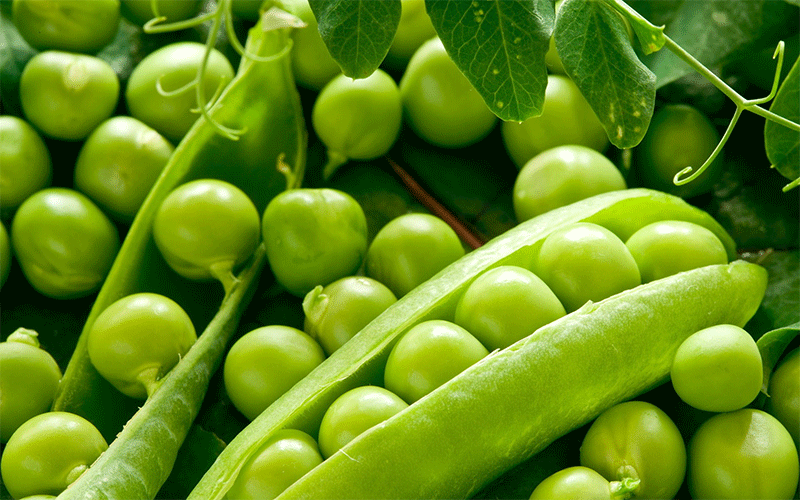
Tatarstan has emerged as a major player in Russia’s agricultural export market, supplying grains, oilseeds, and byproducts to 20 countries. Among its key trade partners are Azerbaijan (wheat, meal), China (oats, oils), Belarus (meal, mustard), and Mongolia (mustard). Recently, the region has begun exporting oats and peas to China, where products must meet stringent phytosanitary requirements.
Strict Quality Control for Global Markets
Every shipment undergoes rigorous laboratory testing to ensure compliance with both Russian and international standards. The Federal Center for Assessing the Safety and Quality of Agricultural Products (FGBU “TsOK APK”) in Tatarstan plays a crucial role in this process. In March 2025 alone, the center conducted 48 laboratory tests on livestock byproducts to verify safety and quality.
Large-Scale Monitoring of Wheat Production
As part of state monitoring efforts, 52 million tons of the new wheat harvest across Russia—including 100% of Tatarstan’s crop—will be inspected. This ensures that the grain meets export and domestic consumption standards, maximizing its market potential.
Why China Matters for Tatarstan’s Agricultural Exports
China’s demand for oats and peas is rising, driven by increasing health consciousness and demand for plant-based proteins. According to the USDA (2024), China imported over 400,000 tons of oats in 2023, with Russia being a key supplier. Similarly, global pea exports are growing at 5.2% annually (FAO, 2024), making this a strategic crop for Tatarstan.
Tatarstan’s focus on quality control and market diversification is paying off, with China becoming a vital destination for its oats and peas. By adhering to international standards and leveraging global demand trends, the region is set to further expand its agricultural exports.
Error