The fungal disease tar spot (Phyllachora maydis) has been confirmed in 15 Missouri counties as of early July, with the earliest detection in Nodaway County on June 16. According to the Crop Protection Network (CPN), the disease is spreading faster than in previous years due to cool spring temperatures and high humidity, creating ideal conditions for fungal growth.
Current Tar Spot Hotspots in Missouri (2024 Data)
The latest CPN tracking data confirms tar spot in the following counties:
- Platte County (July 8)
- DeKalb & Buchanan Counties (July 7)
- Ralls, Knox, & Boone Counties (July 2)
- Gentry & Andrew Counties (June 29)
- Lafayette County (June 25)
- Audrain County (June 24)
- Howard, Cooper, & Saline Counties (June 23)
- Chariton County (June 19)
- Nodaway County (June 16)
Mandy Bish, University of Missouri Extension plant pathologist, notes that tar spot has appeared in June for the past two years, signaling a concerning trend of earlier infections.
Management Strategies: Timing Fungicide Applications for Maximum Protection
When to Spray?
- R1 (Silking) to R3 (Milk Stage): Some agronomists recommend early applications, but Madison Wozniak (FMC Technical Service Manager) suggests R2-R3 for extended protection.
- Post-R4 (Dough Stage): Fungicide applications after this stage show diminished returns, as most products only protect for 14–21 days.
Key Fungicide Application Tips
- Scout early and often—tar spot can appear at any growth stage.
- Prioritize fields with a history of tar spot or those in high-risk counties.
- Monitor weather: Temperatures between 64–73°F with high humidity and prolonged leaf wetness (≥7 hours) favor disease development.
How to Identify Tar Spot
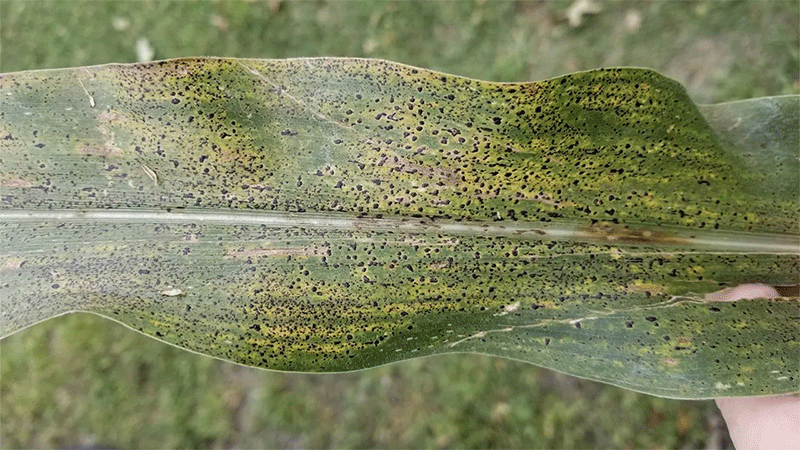
- Black, raised spots (stromata) that cannot be scraped off.
- Tan/brown “fisheye” halos may surround lesions.
- Visible on both sides of leaves and on husks/sheaths.
Proactive Management is Key
With tar spot spreading earlier and wider in Missouri, farmers must prioritize scouting, timely fungicide applications, and weather monitoring to minimize yield losses. Early detection and strategic fungicide use at R2-R3 offer the best defense against this persistent fungal threat.
Error