A Detailed Look at Crop Conditions and Challenges in Southwest Michigan
This past week in Southwest Michigan has seen a break from the recent heavy rains, providing a chance for farmers to progress with wheat harvests, straw, and hay baling. However, the region continues to face challenges from pests and diseases impacting various crops.
Weather Summary
The past week featured mainly dry, clear days with moderate temperatures, a welcome change after significant rainfall in the previous weeks. The forecast predicts an increase in temperatures and humidity over the next week, with a chance of scattered showers early next week. The impact of smoke from Canadian wildfires is expected to be minimal for Michigan crops.
Crop Conditions and Pest Update
Soybeans: Most soybeans have begun pod development, with many entering the R4 and R5 growth stages. Unfortunately, heavy rains earlier in the month left many soybean fields waterlogged, creating favorable conditions for Phytophthora stem and root rot. This disease causes symptoms ranging from stunting and wilting to brown stem lesions, eventually leading to plant death in susceptible varieties.
Fungicide applications for white mold should ideally occur between the R1 and R3 stages. The Sporecaster app indicates a high risk for white mold across southwestern Michigan counties, emphasizing the importance of timely fungicide applications in fields with a history of the disease.
Corn: Most corn has entered the ear development stages, with some fields yet to tassel. Tar spot has been confirmed in several counties, and while rust is present, it is not considered an economic threat. The Tarspotter app shows medium risk for tar spot, recommending vigilance in scouting.
Corn leaf aphid infestations have been noted but are not expected to cause significant damage post-pollination. Western bean cutworm moth counts have decreased, yet scouting for egg masses and larvae remains crucial, particularly in fields at pretassel or freshly tasseled stages.
Wheat: The winter wheat harvest is nearly complete. However, quality has declined in some areas due to heavy precipitation following maturity.
Potatoes: Late blight was identified in St. Joseph County, developing in overly irrigated spots with inadequate fungicide coverage. Preventative fungicide applications and diligent scouting are recommended. The harvest of fresh crop chipping potatoes began this week, slightly earlier than usual.
Alfalfa and Forage: The dry weather facilitated alfalfa and forage cutting, tedding, and baling.
Weekly Water Use and Irrigation Recommendations
Corn and soybeans are at their peak water use during their early reproductive stages. Avoiding water stress during these stages is critical to prevent yield reduction. Estimated weekly crop water use data helps guide irrigation management decisions, with the goal of not depleting more than 50% of soil water.
Field Crops Virtual Breakfast Series
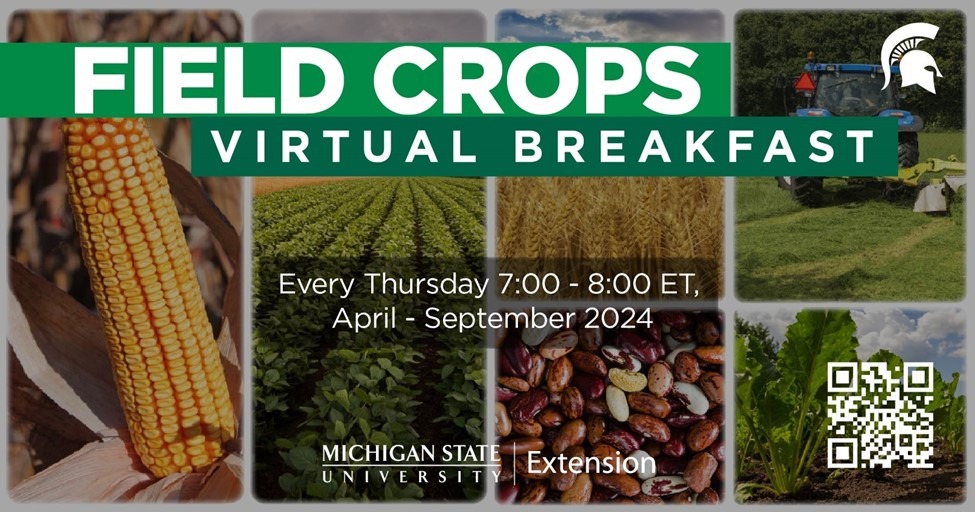
The latest MSU Extension Field Crops Virtual Breakfast focused on current issues, allowing growers to ask specialists about field problems and seasonal challenges. Topics included tar spot, western bean cutworm, soybean re-planting, and weed management in soybeans. Recordings of these sessions are available on the MSU Extension Field Crops Virtual Breakfast webpage and social media platforms.
Error