• About
  • Advertise
  • Careers
  • Contact
Saturday, December 13, 2025
  • Login
No Result
View All Result
Field Crops news
  • Home
  • News
  • AgroTech & Innovation
  • Science
  • Sustainability
  • Market News
  • Research & Development
  • Home
  • News
  • AgroTech & Innovation
  • Science
  • Sustainability
  • Market News
  • Research & Development
No Result
View All Result
Field Crops news
No Result
View All Result
Home Diseases

Southern Rust in Corn: A Growing Threat to Yields and How to Combat It

by Tatiana Ivanova
24 May 2025
in Diseases, News
0
Southern Rust in Corn: A Growing Threat to Yields and How to Combat It
0
SHARES
8
VIEWS
Share on FacebookShare on Twitter

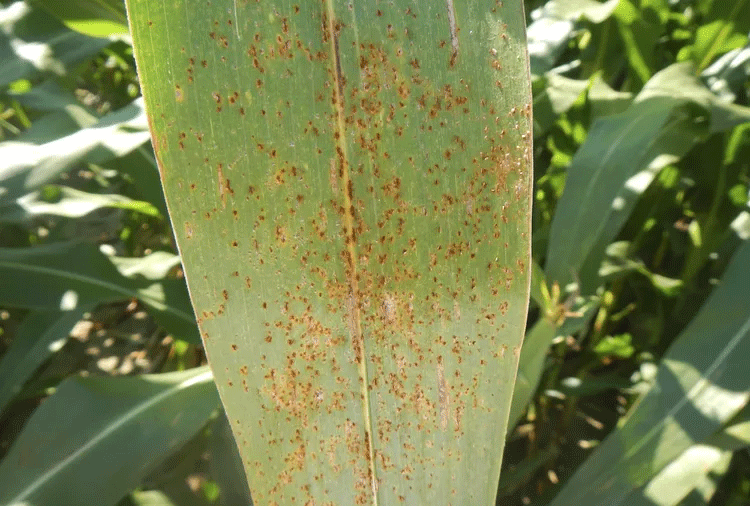
Southern rust (Puccinia polysora) is a formidable fungal disease that poses a significant threat to corn production, particularly in the southern U.S. According to the Crop Protection Network (2023), this pathogen can reduce yields by up to 45% in severe cases, making timely intervention essential.

Identifying Southern Rust

Unlike common rust, which has darker pustules on both leaf surfaces, southern rust appears as raised orange-to-red pustules primarily on the upper leaf surface, often surrounded by yellow halos. Symptoms typically emerge in the mid-to-upper canopy and spread rapidly via windborne spores. Since the fungus does not overwinter in the U.S., infections originate from tropical regions and migrate northward.

Optimal Conditions for Infection

Southern rust thrives in:

  • Temperatures around 80°F (27°C)
  • High humidity (≥90%)
  • At least 6 hours of continuous leaf wetness (University of Kentucky, 2024)

These conditions make late-planted corn particularly vulnerable, especially during warm, wet growing seasons.

Effective Management Strategies

To minimize yield losses, farmers and agronomists should:

  1. Monitor Early and Often – Track disease progression using tools like the Corn IPM Pipe Southern Rust Monitoring System.
  2. Apply Fungicides Strategically – The Crop Protection Network (2023) recommends foliar fungicides between R1 (silking) and R3 (milk stage) for optimal protection.
  3. Choose the Right Fungicide – Products with long residual activity (e.g., triazoles or strobilurin-triazole mixes) provide extended control. In high-pressure situations, a second application may be necessary.

Southern rust remains a serious threat to corn yields, especially in warm, humid regions. By implementing proactive scouting, timely fungicide applications, and resistant hybrids, farmers can significantly reduce losses. Staying informed through real-time disease tracking and local extension advisories is key to making cost-effective management decisions.


Error
Tags: AgronomyCorn DiseasesCorn Yieldcrop protectionfarm managementFungicide ManagementPlant PathologyPrecision AgricultureSouthern RustSustainable Farming

Tatiana Ivanova

Next Post
Iowa’s Planting Surge: Corn and Soybean Progress Outpaces Previous Years Despite Dry Conditions

Iowa's Planting Surge: Corn and Soybean Progress Outpaces Previous Years Despite Dry Conditions

Newsletter

Vietnam on Track to Shatter Rice Export Records in 2024

Vietnam on Track to Shatter Rice Export Records in 2024

19 November 2024

The New Breadbasket: How Russia Cemented its Dominance in the Turkish Grain Market

6 November 2025

Kuban Surpasses 1 Million Ton Grain Harvest: Key Insights for Modern Agriculture

7 July 2025

Corn Under Scrutiny: Kaluga Region Launches Major Pest Control Operation

19 August 2025

Ireland’s Commitment to Justice and International Cooperation Highlighted at EU Ministerial Meeting

15 June 2024

Revamping Flour Rice Policies: A Sustainable Path to Address Surplus Rice

28 November 2024

Omsk Region’s Remarkable Grain Harvest: A Surge in Yields for 2024

11 October 2024

Volgodonsk’s Grain Elevator Up for Sale: What This Means for Russia’s Agricultural Export Infrastructure

12 August 2025

India Is Bringing Free Wi-fi To More Than 1,000 Villages This Year

9 May 2024

Ethiopia’s Remarkable Wheat Production Surge: A Leap from 54 Million to 230 Million Quintals in Four Years

13 December 2024
  • About
  • Advertise
  • Careers
  • Contact
Call us: +51 93 999 5140

© 2020-2024 Field Crops news

Welcome Back!

Login to your account below

Forgotten Password?

Retrieve your password

Please enter your username or email address to reset your password.

Log In
No Result
View All Result
  • Home
  • News
  • Science
  • Sustainability
  • AgroTech & Innovation
  • Market News
  • Science
  • Research & Development
  • About
  • Contact

© 2020-2024 Field Crops news