In a highly unusual weather event for mid-spring, farmers in North Korea’s Jagang, North Pyongan, and North Hamgyong provinces are facing the dual threat of heavy snowfall—over 20 cm in some areas—and subzero temperatures. According to Rodong Sinmun reports from April 14, these conditions, driven by a strong low-pressure system moving from northern China (Hebei, Shanxi, Inner Mongolia), have significantly impacted the country’s northern agricultural belt.
Affected locations include Nangnim, Songwon, Gophung, and Huichon in Jagang Province; Yongbyon, Unsan, and Dongchang in North Pyongan; and Jangjin in South Hamgyong, where snow blanketed rice seedling trays and winter cereal fields.
Key Concerns and Emergency Measures
1. Rice Seedling Protection (벼모)
Early-season rice nursery beds, which are essential for transplanting into paddies later in spring, are especially vulnerable to cold damage and physiological seedling blight under prolonged exposure to low temperatures and snow cover.
To mitigate these risks, agronomists are advising:
- Installation of support rods (“hwalchangdae”) to hold up double plastic film coverings over seedbeds.
- Drainage management to prevent standing water and freezing damage at the root zone.
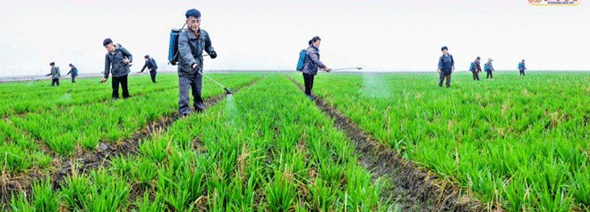
- Application of balanced foliar nutrients and growth regulators, with strict control over spray concentration and frequency to stimulate stress recovery.
- For already-diseased seedbeds, tailored treatment plans are being deployed using protective fungicides and temperature buffering measures.
2. Winter Wheat and Barley
The sudden cold may lead to a reduction in tiller formation and grain development in already-heading winter wheat and barley. These crops are sensitive to low temperatures during the reproductive stage.
Recommendations include:
- Constructing raised ridges with 30 cm deep furrows between rows to enhance drainage.
- Digging 50 cm deep perimeter ditches around waterlogged fields to prevent root rot and oxygen deficiency.
- Close monitoring for frost damage to reproductive structures, with prompt intervention using anti-stress biostimulants where feasible.
3. Spring Wheat, Barley, and Corn (Maize)
As sowing for spring wheat, barley, and corn begins, fields must be protected from excess moisture, which could delay germination and foster fungal infections.
Immediate actions involve:
- Field preparation with slope or contour drainage systems
- Minimizing soil compaction to support fast root development
- Ensuring seed coverage is not shallow, which could expose seeds to freezing stress
A Broader Regional Pattern
These extreme spring conditions are part of a larger East Asian climate anomaly. Recent climate reports from China’s National Climate Center confirm that abnormal low-pressure patterns in the region have triggered cold spells and snowstorms across North China, affecting Hebei, Shanxi, and Inner Mongolia—areas with similar agricultural cycles and vulnerabilities.
Such late-season anomalies are expected to become more frequent due to climate volatility, as confirmed by the IPCC’s Sixth Assessment Report, which notes increased variability in spring temperature and precipitation patterns in East Asia.
As North Korean farmers confront an unexpected spring freeze, their rapid response—grounded in practical agronomy and field management—is a reminder of the resilience required in modern farming. While challenges like physiological rice seedling blight and lodging in cereals loom, timely interventions such as plastic insulation, drainage enhancements, and targeted foliar nutrition are critical tools for stabilizing yields in the face of climate uncertainty.
Error