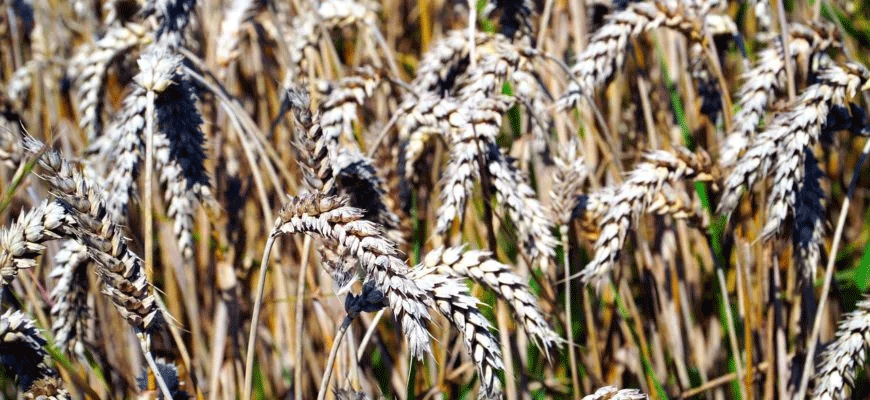
The 2025 harvest in Omsk Oblast is concluding on a note of both triumph and challenge. Despite difficult weather, including August rains that delayed harvesting and created waterlogged field conditions, farmers are reporting impressive results. A prime example is the farm of Alexander Klochkov in the Kalachinsky District, which has achieved a wheat yield of 60 centners per hectare (approximately 6 tonnes/ha), a figure comparable to yields in Russia’s fertile Kuban region.
However, this bumper harvest has led to a familiar agricultural dilemma: high supply is depressing local prices. Farmers report that the price of wheat has fallen to around 8,500 rubles per tonne, a significant drop from the 15,000 rubles per tonne seen just a few years ago. Faced with what they describe as a “dead” domestic market, Omsk’s agricultural producers are strategically reorienting their sales towards export channels to preserve income. Peas and flax are already being prepared for shipment to China, with a portion of the wheat harvest likely to follow.
To support this export-driven model, farms are concurrently investing in critical infrastructure. Despite the logistical challenges of harvesting in wet conditions, where machinery operates at its limits, significant capital is being directed toward modern elevators, drying complexes, and quality control laboratories. This ensures that the grain meets the strict standards of international buyers.
Connecting to Broader Trends
This situation reflects a global pattern where regions with rising agricultural productivity must look beyond their borders for economic sustainability. According to the USDA’s July 2024 Grain: World Markets and Trade report, China remains the world’s largest importer of agricultural products, with a growing appetite for protein crops like peas and oilseeds like flax. The strategic shift by Omsk farmers aligns perfectly with this demand. Furthermore, a 2024 analysis by the FAO emphasizes that investment in post-harvest infrastructure is a critical determinant of a region’s ability to participate in high-value export markets, reducing losses and ensuring consistent quality—exactly the strategy being employed in Omsk.
The experience of Omsk’s farmers offers a critical lesson in modern agricultural economics: record yields alone do not guarantee profitability. Success increasingly depends on a dual strategy of achieving production excellence while simultaneously developing sophisticated market access and logistics. For farm owners and agronomists, this means that variety selection and crop management must be considered alongside potential export destinations. For agricultural engineers and scientists, it underscores the importance of innovations in post-harvest technology and supply chain efficiency. The pivot to China is not just a temporary fix but a necessary evolution for the long-term stability of farms in a competitive global landscape.
Error