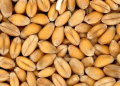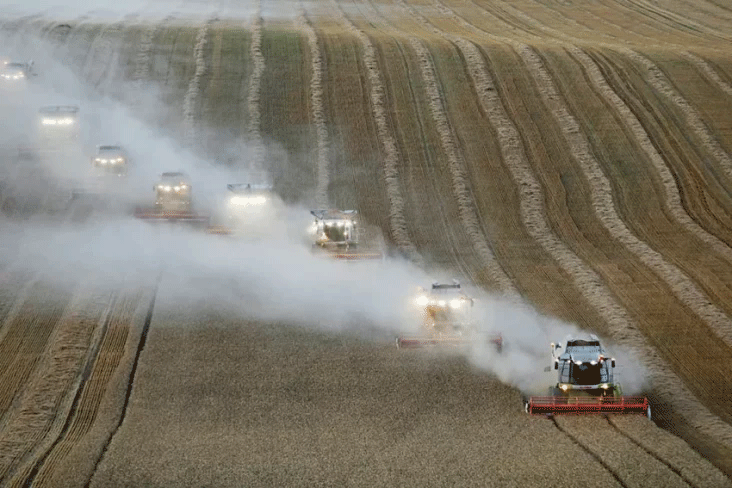
Russia has significantly increased its wheat exports to Africa in the first quarter of 2025, reaching 11.8 million tons between January and early April, according to data from Rosselkhoznadzor (Russia’s Federal Service for Veterinary and Phytosanitary Surveillance). This marks a sharp rise compared to the same period in 2024, driven by growing demand and competitive pricing.
Key Export Trends
- Nigeria’s imports quadrupled to 210,000 tons, making it one of the fastest-growing markets.
- Tunisia’s purchases rose by 78% (191,000 tons), while Morocco’s increased by 72% (147,000 tons).
- Mozambik’s imports surged twelvefold to 74,000 tons, highlighting expanding trade ties.
- Egypt remains the top importer, with Russian food exports to Africa exceeding $7 billion in 2024 (a 19% increase from 2023).
Russia has also overtaken France as Morocco’s leading grain supplier, attributed to lower prices and limited EU supply. Beyond Africa, exports of buckwheat to China tripled to 127,000 tons, and barley shipments resumed to Lebanon (9,000 tons).
Driving Factors Behind the Surge
- Competitive Pricing – Russian wheat remains cheaper than EU and U.S. alternatives, making it attractive for African nations facing food security challenges.
- Logistical Expansion – Increased shipments from key ports like Leningrad and Rostov have boosted export capacity.
- Government Targets – President Putin’s goal to increase agricultural exports by 50% by 2030 (from $37 billion in 2021) is accelerating trade growth.
Implications for Global Agriculture
- African farmers may face stiff competition from cheaper Russian imports, potentially impacting local production.
- Agribusinesses and traders should monitor shifts in supply chains, as Russia strengthens its hold on African markets.
- Scientists and agronomists must explore ways to enhance local crop resilience to reduce dependency on imports.
Russia’s aggressive wheat export strategy is reshaping Africa’s food import landscape. While this provides short-term relief for grain-deficit nations, long-term food security will require investment in local agriculture, diversified suppliers, and sustainable farming practices. Stakeholders must adapt to these evolving trade dynamics to ensure stability in global food markets.
Error