Russia’s Wheat Donation Supports Tajik Schoolchildren
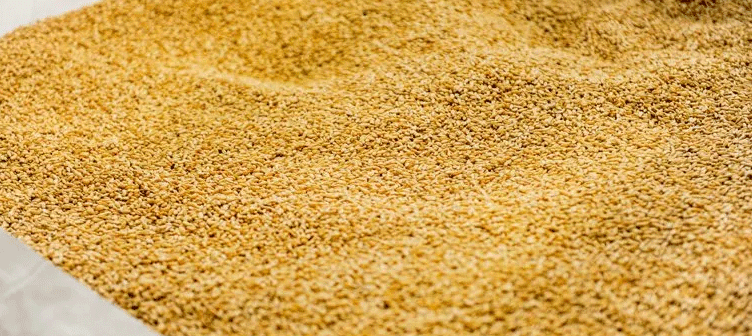
The Russian Federation has supplied 270 tons of fortified wheat to Tajikistan under a UN World Food Programme (WFP) initiative, aimed at improving school nutrition. The donation, facilitated by the Russian Embassy in Dushanbe, will help provide hot meals for approximately 450,000 primary school students across 2,000 schools in 53 districts of Tajikistan.
A Strategic Partnership in Food Security
This aid is part of a broader Russia-Tajikistan strategic partnership, which includes economic and military cooperation. The two countries recently approved a joint cooperation program extending to 2030, reinforcing their long-term alliance.
According to Vera Khutorskaya, Counselor-Minister at the Russian Embassy in Tajikistan, such food assistance ensures that rural schools receive high-quality, nutritious products, combating malnutrition and improving education outcomes.
Global Context: Food Aid and Agricultural Diplomacy
Russia, one of the world’s top wheat exporters, has increasingly used grain diplomacy to strengthen ties with allied nations. In 2023, Russia exported over 50 million tons of wheat, with a portion allocated for humanitarian aid.
The WFP’s school feeding program in Tajikistan has been crucial, as nearly 26% of children under 5 in the country suffer from stunting due to malnutrition (UNICEF, 2023). Fortified wheat, enriched with iron, zinc, and vitamins, helps address micronutrient deficiencies.
Russia’s donation underscores the strategic role of agricultural exports in diplomacy, while supporting Tajikistan’s food security. As global wheat demand rises, such initiatives highlight how grain-producing nations can leverage food aid for geopolitical and humanitarian benefits.
Error