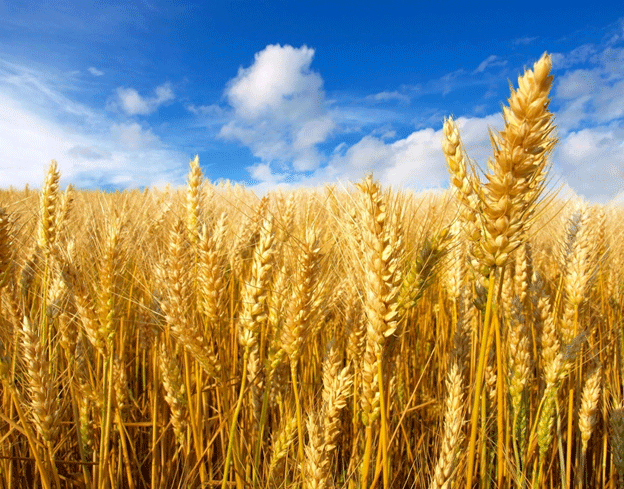
The federal intervention fund was established as a mechanism to stabilize grain prices in Russia. When market prices drop, the government purchases grain to remove excess supply, thereby supporting agricultural producers. The wheat now set for release was acquired during interventions from 2014 to 2016 and again from 2022 to 2024.
The sale will be conducted through exchange trading on the domestic market, with prices set at or above the minimum selling price and no lower than the purchase price. This approach ensures that the government can stabilize prices while maintaining fair market value for the grain.
Why the Sale Now?
The decision to release grain from the intervention fund is typically made in response to rising prices. By introducing additional supply into the market, the government aims to curb price inflation, ensuring affordability for consumers and maintaining market stability.
Given that Russia has dominated global wheat exports recently, the internal dynamics of the Russian agricultural market are crucial. While exports remain strong, there are concerns about potential declines, with forecasts suggesting that wheat exports could fall to around 40 million tons in the near future.
Implications for Farmers and Agribusiness
For Russian farmers and agribusinesses, the sale of grain from the intervention fund presents both opportunities and challenges:
- Price Stability: The release of grain aims to stabilize domestic prices, which can benefit consumers but may limit price increases for producers. Farmers who rely on high market prices to offset production costs might find this challenging.
- Market Predictability: With the government actively managing supply through the intervention fund, the agricultural sector can expect more predictable market conditions. This predictability can help farmers make more informed decisions about planting, harvesting, and selling their crops.
- Export Dynamics: As Russia navigates its role as a top wheat exporter, internal market stability becomes increasingly important. The intervention fund’s role in managing supply could impact export strategies, particularly if domestic needs take precedence over international sales.
Global Context
Russia’s position as a leading wheat exporter has significant global implications. Any changes in Russia’s export capacity can influence global wheat prices, impacting food security in regions dependent on Russian grain. As such, the domestic decisions made regarding grain reserves are closely watched by international markets.
The Russian government’s decision to sell up to 500,000 tons of grain from the federal intervention fund in 2024 is a strategic move to stabilize the domestic market. For farmers, agronomists, and agricultural businesses, understanding the nuances of this decision is crucial for navigating the evolving market landscape. While the intervention aims to support market stability, the broader implications on pricing, exports, and agricultural planning must be carefully considered.
Error