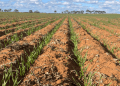
The Russian Ministry of Agriculture has reaffirmed its 2025 grain and legume production forecast at 135 million tons, contingent on favorable weather during the harvesting period. However, the ministry acknowledges significant challenges in key southern regions, including Rostov Oblast, Crimea, and parts of Krasnodar Krai, where unfavorable conditions have impacted crop development.
Regional Variations in Yield Performance
While southern regions struggle, other areas show promising results. Central, Volga, and North Caucasus federal districts, along with select southern regions like Adygea and Volgograd, report higher yields compared to 2024. This uneven distribution highlights the growing influence of climate variability on agricultural output.
Comparing 2024 and 2025 Projections
According to Rosstat, Russia’s 2024 grain harvest (excluding new regions) reached 125.9 million tons. When including newly incorporated territories, the Ministry of Agriculture estimates a total of 129.8 million tons. Achieving the 2025 target would require an additional 5.2 million tons, a challenging but possible increase if weather conditions remain supportive.
Global Context and Market Implications
Russia remains one of the world’s top wheat exporters, supplying over 20% of global wheat trade (USDA, 2024). Any fluctuations in Russian grain production can significantly impact global prices. With drought risks in the south and improving yields elsewhere, market analysts are closely monitoring the situation.
While the 135 million ton target is achievable, it hinges on stable weather during critical growth and harvest phases. Farmers and agronomists must remain vigilant, adopting adaptive strategies such as drought-resistant crop varieties and precision irrigation to mitigate risks. The coming months will be decisive in determining whether Russia meets its ambitious grain production goals.
Error