

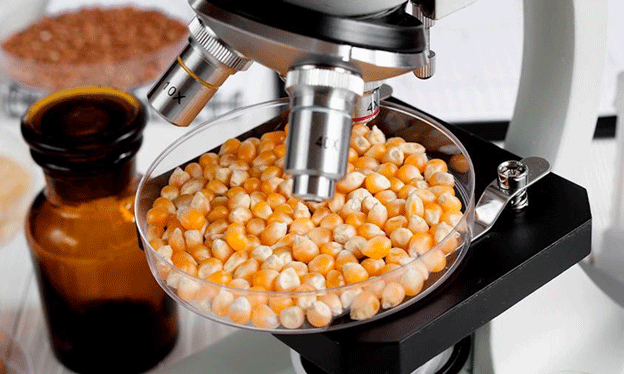
Russian agricultural authorities have intercepted a shipment of 2.4 tons of corn seeds from Spain found to be contaminated with southern corn leaf blight, a quarantine disease in Russia. This action underscores the country’s stringent phytosanitary measures to protect domestic agriculture.
In a recent enforcement of its phytosanitary regulations, Russian authorities in Krasnodar have prohibited the import of a 2.4-ton shipment of corn seeds from Spain. The seeds were intended for sowing but were found to be contaminated with southern corn leaf blight (Bipolaris maydis), a disease that poses a significant threat to corn crops.
Southern corn leaf blight affects various parts of the corn plant, including leaves, husks, and seeds. Infected plants exhibit pale green or yellow lesions on leaves, while seeds may become discolored, shriveled, and covered with a sooty mold. The disease can lead to substantial yield losses if not managed properly.
The detection was confirmed by specialists at the Krasnodar branch of the All-Russian Plant Quarantine Center (FGBU “VNIIKR”). To prevent the introduction and spread of this pathogen within Russia, the entire consignment was denied entry and ordered to be returned to the sender. This action aligns with Russia’s commitment to maintaining strict import controls to safeguard its agricultural sector.
This incident is part of a broader pattern of Russia enhancing its import surveillance. In December 2024, the Federal Service for Veterinary and Phytosanitary Surveillance (Rosselkhoznadzor) imposed bans on sunflower and corn seed imports from several countries, including Chile, Turkey, Hungary, and France. These measures were implemented after quarantine pests, such as sunflower phomopsis blight and corn leaf spot, were detected in imported consignments.
The economic implications of such diseases are considerable. For instance, sunflower phomopsis blight can result in up to an 80% reduction in crop yields, with potential economic damages estimated at 2.4 billion rubles. Similarly, corn leaf spot poses a significant threat to crop productivity and quality.
In light of these challenges, Russia has been actively reducing its reliance on imported seeds. As of December 15, 2024, the country imported 29,800 tons of seeds, marking a nearly 60% decrease compared to the same period in the previous year.
This strategic move aims to bolster domestic seed production and ensure the health and resilience of Russia’s agricultural outputs.
The interception of contaminated corn seeds from Spain highlights Russia’s proactive stance in protecting its agriculture from invasive pests and diseases. By enforcing stringent import controls and reducing dependency on foreign seeds, Russia aims to safeguard its crop yields and maintain the integrity of its food supply chain.
Error