

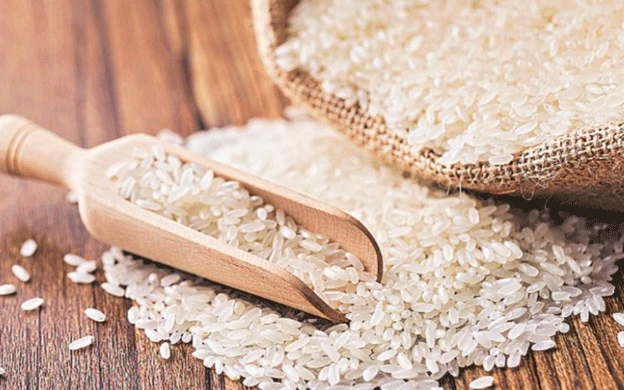
In a recent press conference, Japan’s Agriculture Minister Taku Eto cast doubt on the United States’ seriousness about expanding rice exports to Japan. His remarks come at a time of heightened trade tensions and growing scrutiny over global food supply strategies.
While the U.S. has repeatedly criticized Japan’s tariff barriers—particularly on rice—as unfair and restrictive, Minister Eto questioned whether Washington is truly prioritizing agricultural trade expansion or simply using tariffs as leverage in broader economic negotiations.
“I have serious doubts whether increased rice imports from the U.S. would actually contribute to food security or solve real concerns about our agricultural future,” Eto said.
Domestic Production vs. Import Dependency
Rice remains a cornerstone of Japanese food security and cultural identity. Japan grows roughly 7.5 to 8 million tons of rice annually and maintains a self-sufficiency rate of over 95% for rice. This level of independence is seen by Japanese policymakers as a critical buffer against global supply chain disruptions and geopolitical instability.
Eto expressed concern that increasing dependence on cheap imported rice—even if U.S. prices are lower—could undermine domestic production, weaken rural economies, and lead to long-term risks in national food resilience. The minister made it clear that Japanese rice farmers remain a policy priority and any deal that jeopardizes their future would face strong resistance.
U.S. Tariff Policy Adds to Tensions
The comments follow a broader wave of protectionist measures from the U.S. government. On April 2, President Donald Trump signed an executive order imposing “reciprocal tariffs” on imports from countries with which the U.S. has significant trade deficits. For Japan, this translated into a 24% tariff—well above the base rate of 10%.
Although the U.S. announced a temporary 90-day suspension of these tariffs for 75 countries starting April 9, the long-term direction of trade relations remains uncertain. Japan, one of America’s key allies and trading partners, is navigating these shifts cautiously, especially when it comes to its sensitive agricultural sectors.
The Role of Rice in U.S.-Japan Trade Talks
Japan has historically limited rice imports through a high-tariff quota system, protecting its domestic farmers from global competition. In return, the country agreed to limited access for U.S. rice under the Uruguay Round Agreement and later under the Trans-Pacific Partnership (TPP), though the U.S. exited the TPP in 2017.
According to Japan’s leading daily Yomiuri Shimbun, ongoing trade discussions include potential concessions such as increased imports of U.S. rice and soybeans and easing vehicle certification rules for American carmakers. However, Eto declined to comment on the specifics of these negotiations, only stating he had “a proposal for settlement,” without providing details.
Outlook and Industry Implications
- Japanese rice farmers and cooperatives will likely push back against any move that expands U.S. rice imports at the expense of local growers.
- U.S. rice exporters, meanwhile, are eager to secure greater access to the Japanese market, which is known for its premium price segment and consistent demand.
- The evolving tariff policies from the U.S. may create uncertainty in planning and pricing for both importers and exporters.
While U.S. trade rhetoric suggests a push to expand rice exports to Japan, Japanese officials remain skeptical of the true intent and long-term impact of such efforts. For both countries, balancing market access with agricultural self-sufficiency and political trust remains a delicate task—one that will shape the future of rice trade in the Pacific region.
Error