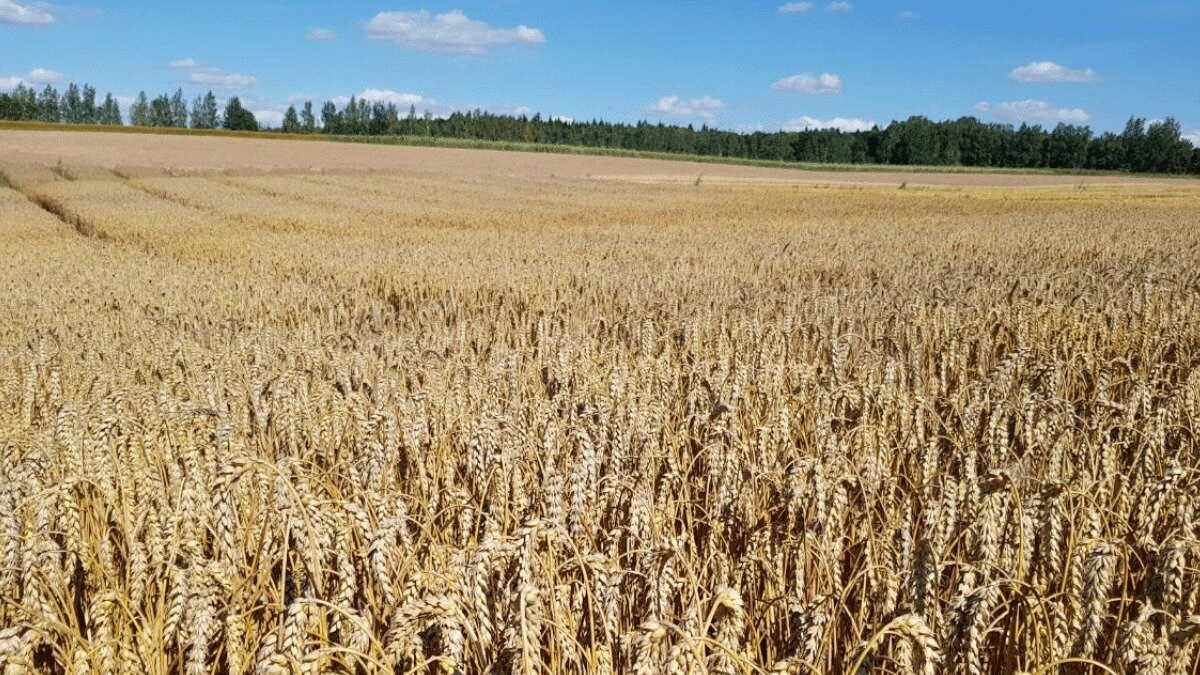
Agricultural innovation often begins in the lab, and this case is no exception. Anastasia Elisutikova, a master’s student at Kuban State Agrarian University, has been decoding bacterial DNA to identify strains capable of suppressing wheat pathogens, including ergot (Claviceps purpurea). After months of research, her team isolated Bacillus subtilis, a bacterium that not only combats fungal infections but also enhances plant growth.
Patented in 2022, this strain became the foundation for a new bio-fungicide. Preliminary field tests confirm an 85% effectiveness rate against fungal diseases, drastically reducing crop losses. With wheat yields increasing by up to 30%, the potential impact on global food security is immense.
A Sustainable Solution to Evolving Pathogens
Chemical fungicides face a growing challenge: pathogens are evolving resistance. For example, sugar beet crops have already suffered from decreased chemical treatment efficacy. To address this, researchers expanded testing to other crops, including beets, with promising early results.
Kuban scientists have identified two additional bacterial strains with potential applications in apple and grape cultivation. If successful, these could further reduce reliance on synthetic agrochemicals, aligning with the global shift toward sustainable farming.
Next Steps: Registration and Mass Production
The Bacillus subtilis-based biopreparation is now undergoing registration trials, a critical step before commercial scaling. Once approved, agribusinesses can produce this next-generation bio-fungicide, offering farmers an eco-friendly tool to boost productivity.
As global demand for wheat rises, innovations like Kuban’s bio-fungicide provide a dual benefit: higher yields and reduced chemical dependency. With further development, this technology could revolutionize crop protection, benefiting farmers, agronomists, and the environment alike.
Error