Students from the Malinsky Educational Complex in Stupino, Moscow Oblast, have achieved a significant milestone in agricultural science by growing a unique frost-resistant Afghan wheat variety. This initiative, supported by the Institute of Phytopathology, is part of a five-year research project aimed at enhancing wheat resilience and yield under modern climatic challenges.
Experimental Success Against Russian Winters
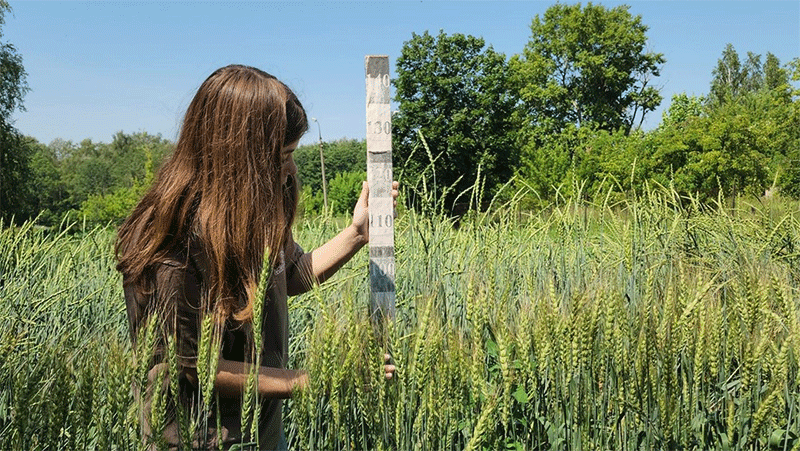
The wheat was cultivated on two experimental plots: one at the selection field in Golitsyn and another in Dubnevo village, where school students assisted in its care. Comparative analysis with the control winter wheat variety *Moskovskaya-39* revealed striking results:
- 100% frost resistance in the Afghan variety, compared to just 75% in *Moskovskaya-39*.
- Improved protein and gluten content, matching modern wheat standards.
Currently in the milk-ripe stage, the harvest is expected in early August. A portion of the seeds will be sent to the Kabul Agricultural Institute, while the rest will be used to develop new high-yield, cold-resistant varieties for Russian agriculture.
A Legacy from Vavilov to Modern Science
This wheat traces back to the 1920s when renowned scientist Nikolai Vavilov first introduced it to the USSR, fascinated by its ability to withstand extreme temperature fluctuations. Five years ago, researchers obtained fresh samples and, using Vavilov’s seed bank, enhanced its nutritional profile. The involvement of Stupino’s young agronomists highlights the importance of engaging the next generation in agricultural innovation.
A Step Toward Climate-Resilient Farming
As global temperatures become more erratic, frost-resistant crops like this Afghan wheat could be vital for sustainable agriculture. With further development, it may offer Russian farmers a reliable solution against harsh winters while boosting food security.
Error