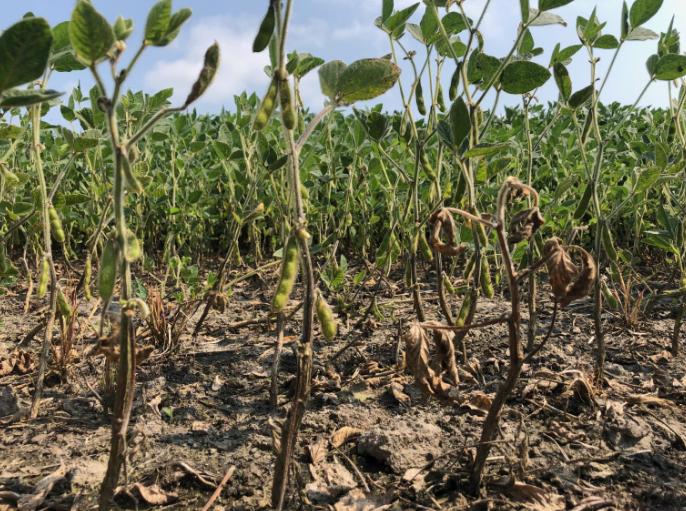
Soybean (Glycine max) seeds provide protein and oil for animal feed and human consumption. Soybean is the fourth largest field crop in the world and meets 60% of global vegetable oil demand . Worldwide production reached 350 million tonnes in 2018 but diseases caused by fungal and oomycete pathogens remain a major limitation for soybean production. Among them, Phytophthora stem and root rot (PRR), caused by the oomycete soilborne pathogen Phytophthora sojae, is particularly devastating because it can attack soybean plants at all growth stages.
An effective way to reduce PRR damage is to plant soybean cultivars with genes conferring resistance to P. sojae (Rps). These genes encode proteins containing nucleotide-binding site and leucine-rich repeat (NLR) motifs. Avirulence (Avr) genes of P. sojae encode effector proteins that are expressed only during infection, and most of them contain RxLR and DEER domains believed to be required for translocation . When a soybean Rps recognizes the corresponding Avr from P. sojae, plant defence reactions are triggered, resulting in disease resistance. Overexploitation of single Rps genes in the field exerts a strong selection pressure against the avirulent isolates, which in turn enrich the selection of genetic variants of Avr genes or its regulatory elements favouring virulence. Genetic modifications such as insertion, deletion and substitution in the promoter region or in the coding sequence of Avr genes allow the pathogen to evade host recognition and infect the plant . The estimated lifespan of newly introduced Rps genes ranges from 8 to 20 years. The effectiveness of Rps1a lasted for 40 years, while that of Rps1c and 1k was less than 20 years. The virulence profile refers to the combination of virulence genes exhibited by a P. sojae isolate. The virulence profile can vary among different isolates and is typically characterized by its ability to overcome Rps in soybean plants. The virulence profiles of P. sojae evolve over time as the pathogen adapts to selective pressure imposed by resistant soybean cultivars. Diversification of Avr genes in P. sojae has led to increased virulence profiles and limits the effectiveness of Rps genes in soybean . This information is crucial for soybean breeders and pathologists to develop new resistant varieties by identifying and deploying Rps genes that can effectively counter the prevalent virulence factors in P. sojae populations. To date, more than 33 Rps genes/alleles have been reported in soybean while six of them (Rps1a, 1b, 1c, 1k, 3a and 6) have been introgressed into commercial soybean varieties
Reference: Santhanam, P., Labbé, C., Tremblay, V. & Bélanger, R.R. (2024) A rapid molecular diagnostic tool to discriminate alleles of avirulence genes and haplotypes of Phytophthora sojae using high-resolution melting analysis. Molecular Plant Pathology, 25, e13406. Available from: https://doi.org/10.1111/mpp.13406Ку
Error