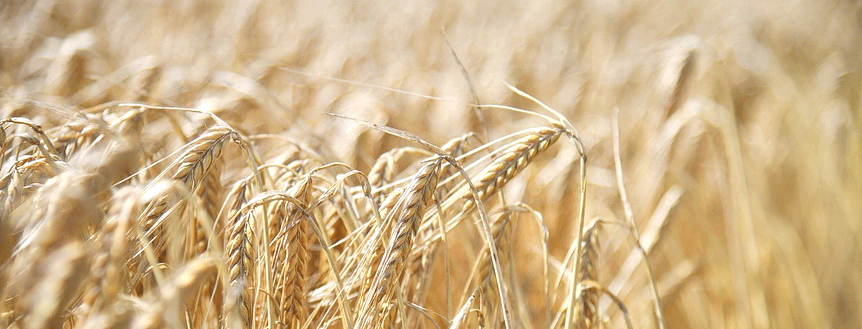
In a remarkable agricultural achievement, Belarus’s Brest region has harvested an unprecedented 1.5 million tons of grain (excluding corn and rapeseed) as of August 29—the highest yield in the region’s history. This represents a substantial increase of 187,000 tons compared to the same period in 2024, with an average yield of 45.1 centners per hectare (approximately 4.51 tons/hectare), a significant improvement of 7.8 centners per hectare over the previous year. The success is further highlighted by eight districts within the region each producing over 100,000 tons of grain, demonstrating widespread excellence across the agricultural sector.
Several factors likely contributed to this record-breaking harvest. While specific details weren’t provided in the source material, such exceptional yields typically result from optimal growing conditions combined with advanced agricultural practices. According to the FAO’s 2024 European Grain Production Report, regions implementing precision agriculture technologies have seen average yield increases of 15-20% compared to conventional methods. Additionally, favorable weather conditions—particularly adequate spring moisture and moderate summer temperatures—play a crucial role in grain development and final yield outcomes. The USDA’s August 2025 Grain Market Report notes that Eastern European countries with improved soil management practices have consistently achieved yield gains of 5-8% annually over the past three years.
The strategic importance of this harvest extends beyond regional boundaries. Belarus, as a significant agricultural producer in Eastern Europe, contributes substantially to global food security. The record production in Brest comes at a critical time when global grain stocks face pressure from climate-related production challenges in other parts of the world. According to the International Grains Council, countries that have invested in agricultural modernization and climate-resilient practices have been better positioned to maintain stable production despite increasingly variable weather patterns.
Brest’s record grain harvest demonstrates the powerful combination of favorable growing conditions and modern agricultural practices. This achievement highlights the importance of continued investment in agricultural technology, soil health management, and climate adaptation strategies. For farmers and agricultural professionals worldwide, Brest’s success offers valuable insights into the potential for yield optimization through strategic planning and implementation of evidence-based farming practices. As climate variability continues to challenge global food production, regions that prioritize agricultural innovation and sustainable practices will be best positioned to maintain food security and economic stability. The Brest example serves as both an inspiration and a practical case study in achieving agricultural excellence through coordinated effort and appropriate resource allocation.
Error