With April bringing warmer temperatures and seasonal rains to much of South Korea, wheat and barley crops are approaching the critical heading and flowering stages, when the risk of Fusarium Head Blight (FHB) infection is at its peak. In Hamyang County, Gyeongsangnam-do, local agricultural authorities are sounding the alarm early to help farmers prevent devastating losses caused by this fungal disease.
Understanding the Threat
Fusarium Head Blight, caused primarily by Fusarium graminearum, is a serious disease that affects wheat and barley worldwide. It develops most aggressively when:
- Temperatures are warm (20–30°C)
- Relative humidity stays above 90%
- Rainy conditions persist for more than 3 consecutive days during heading and flowering
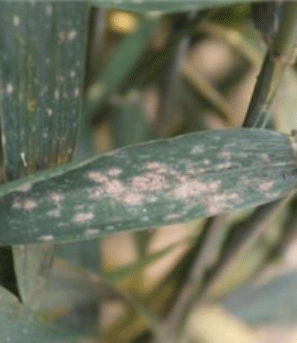
The disease symptoms include:
- Premature whitening or browning of spikelets
- Shriveling or aborted kernels
- Pink or reddish mold forming on affected grain heads
One of the most concerning consequences of FHB is the production of mycotoxins, particularly deoxynivalenol (DON), which can render grain unsafe for food and feed use. In severe outbreaks, yield losses can reach 30–50%, and contaminated harvests may be completely unmarketable.
2024 Climate Outlook and Risk Level
According to the Korea Meteorological Administration, April 2024 is expected to be warmer than average, with precipitation levels near the seasonal norm. This aligns with FHB high-risk conditions, particularly in regions with poor drainage or fields with dense crop canopies.
Prevention and Early Intervention
Agricultural experts in Hamyang County are advising the following integrated approach:
1. Field Management
- Ensure proper drainage by digging furrows at least 30 cm deep between rows to reduce field moisture and lower humidity around the canopy.
- Avoid excessive nitrogen fertilization which can promote dense, disease-prone growth.
2. Fungicide Application
- Begin preventative fungicide treatments at the start of heading, continuing through flowering.
- Use only fungicides registered for wheat and barley (consult the Rural Development Administration’s Agrochemical Safety Information System).
- Rotate 2–3 different active ingredients with distinct modes of action.
- Apply sprays at 7–10 day intervals to maintain protection throughout the susceptible period.
International research supports this strategy. According to the USDA and the International Maize and Wheat Improvement Center (CIMMYT), proper fungicide timing can reduce disease incidence by up to 60% and DON contamination by 50–70%, especially when paired with resistant varieties and good field hygiene.
3. Weather Monitoring and Disease Scouting
Farmers are strongly encouraged to check medium-range weather forecasts daily and monitor fields for early signs of infection. Spotting and treating initial cases can prevent field-wide outbreaks.
As heading season approaches for wheat and barley in Korea, Fusarium Head Blight represents one of the most economically and agronomically significant threats. With climate conditions favoring its development this year, timely fungicide application, strategic field drainage, and regular monitoring will be essential tools for farmers to protect yields, grain quality, and food safety. A proactive approach today can prevent a crisis at harvest.
Error