

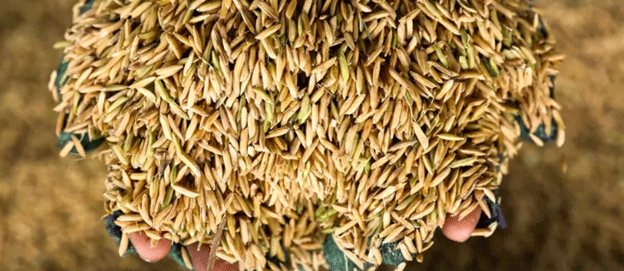
Thailand’s rice farmers, a cornerstone of the nation’s agriculture and a significant political constituency, are confronting a severe decline in paddy prices. This downturn has led to widespread protests and poses a substantial challenge to the Pheu Thai-led government, which has been in power for two years.
Declining Rice Prices and Farmer Protests
In recent years, Thai rice farmers have benefited from favorable market conditions, with paddy prices reaching between 11,000 to 16,000 baht per ton by March 2024—the highest in 17 years. However, as of February 2025, prices have plummeted to approximately 6,000-8,000 baht per ton, a stark 30% year-on-year decrease. This sharp decline has reignited farmer protests, with demands for government intervention to stabilize incomes.
On February 9, 2025, rice farmers convened at the Ministry of Commerce, proposing measures such as a rice price guarantee scheme at 11,000 baht per ton for paddy rice with 15% moisture content and a compensation scheme to support farmers’ incomes. The lack of immediate government response led to escalated protests, including the blockage of major highways, underscoring the urgency of their plight.
Government Response and Measures
In response to the escalating crisis, Commerce Minister Pichai Naripthaphan announced a support package worth 1.89 billion baht. The measures include loans for farmers to delay paddy sales, assistance with storage fees, and coverage of interest costs for rice mills to store the crop. These initiatives aim to maintain paddy prices above 8,000 baht per ton.
Despite these efforts, many farmers remain dissatisfied, arguing that the support falls short of covering production costs, which are as high as 6,500 baht per ton. Farmer leader Thitiwat Kleepmalai from Ayutthaya province expressed skepticism about the government’s sincerity, highlighting the disconnect between policy measures and on-the-ground realities.
External Factors Influencing Prices
The decline in rice prices is attributed to several external factors. Notably, India’s resumption of rice exports has increased global supply, exerting downward pressure on prices. Additionally, decreased demand from key importers such as Indonesia and the Philippines has further exacerbated the situation.
The current crisis underscores the vulnerability of Thailand’s rice sector to global market fluctuations and the pressing need for sustainable, long-term solutions. While immediate financial aid provides temporary relief, addressing structural issues such as high production costs, climate change impacts, and market competitiveness is essential. Failure to implement comprehensive reforms may not only jeopardize the livelihoods of millions of farmers but also pose significant political challenges for the ruling government.
Error