The wheat stem sawfly, a destructive pest in the Nebraska Panhandle, has long challenged wheat growers by reducing yields and causing lodging. According to research from the University of Nebraska-Lincoln (UNL) Extension and the High Plains Ag Lab (HPAL), sawfly infestations not only cause physical damage to wheat stems but also reduce photosynthate transfer to grain, leading to smaller wheat heads and lower productivity.
At a recent Crop Production Clinic, Nebraska Extension specialists shared a promising solution: leveraging Bracon spp., a parasitoid wasp, to control the sawfly population. These wasps are natural predators that paralyze and kill sawfly larvae, thereby reducing crop damage. Researchers have observed significant success in the Sidney area and southern Panhandle, where the wasps have helped protect grain yields.
The Straw Bale Relocation Project
To expand the wasps’ impact, the research team, led by Nebraska Extension Entomologist Pin-Chu Lai, is launching a project to relocate Bracon spp. using straw bales from the High Plains Ag Lab, dubbed a “parasitoid wasp nursery.” The idea is to place the straw bales, containing the wasps, in wheat fields with heavy sawfly infestations.
“We want to move those wasps, who will be in bales of straw, so that we can release those good guys into fields infested by sawfly,” Lai explained. The project requires extensive collaboration and monitoring but holds promise for a sustainable, eco-friendly pest management strategy.
A Watchful Eye on the European Corn Borer
While the wheat stem sawfly remains a primary concern, Nebraska farmers are also being cautioned about the resurgence of the European corn borer, which has developed resistance to BT crops in Canada and parts of the northeastern U.S. Although BT resistance has not yet been detected in Nebraska, Julie Peterson, Nebraska Extension Entomologist, emphasized the need for vigilance.
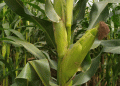
The European corn borer, a pest that feeds on corn leaves, stalks, and ears, was largely controlled after BT crops were introduced in 1996. However, resistance could pose a new threat to corn yields if it spreads to Nebraska. Farmers are advised to monitor for signs of the pest, particularly during its two peak generations in June and after tasseling.
The fight against agricultural pests like the wheat stem sawfly and the European corn borer highlights the importance of innovative pest management strategies and proactive monitoring. The relocation of parasitoid wasps in Nebraska exemplifies a sustainable approach to pest control, offering hope to wheat growers in affected regions. As farmers face evolving threats, staying informed and adopting integrated pest management practices will be crucial for safeguarding crop yields and sustaining agricultural productivity.
Error