
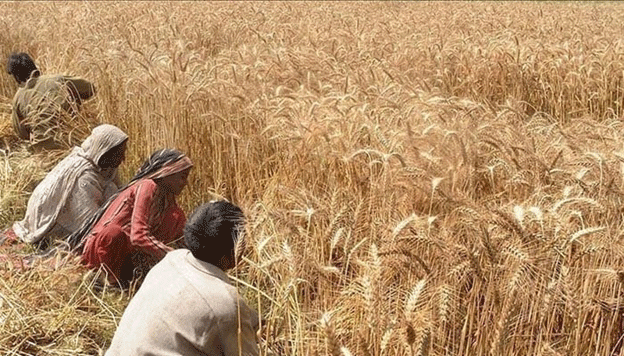
Pakistan’s agricultural sector is facing a critical turning point. On Sunday, the Pakistan Kissan Ittehad (PKI) issued a strong warning: wheat sowing may come to a halt if the government does not announce a fair support price for the upcoming season. This comes amid widespread frustration over inadequate subsidies, rising input costs, and perceived government indifference.
Khalid Mahmood Khokar, President of PKI, emphasized during a press conference that the Rs15 billion agricultural relief package recently announced was deeply insufficient given the scale of farmers’ losses — especially considering the devastating impacts of climate change on crop yields. “The advisers of the Punjab Chief Minister insult farmers while we ensure the country’s food security,” he stated. He further called on the Chief of Army Staff, Gen Asim Munir, to intervene and support the farmers.
Currently, the wheat support price remains undefined. In 2023, the Government of Punjab had set a support price of Rs3,900 per 40 kg. However, this year, amidst soaring inflation and increased costs of fertilizers, diesel, and seed, farmers argue that a minimum price of Rs4,500–Rs5,000 per 40 kg is necessary to make wheat cultivation economically viable.
According to data from the Pakistan Bureau of Statistics and international market monitors, wheat production in Pakistan declined slightly in the 2022–23 season due to unseasonal rains and floods, with an output of around 27.5 million tonnes, down from 28.8 million tonnes the previous year. Meanwhile, the cost of urea fertilizer alone has jumped by more than 40% since last year. In many rural districts, the rising cost of living and farm inputs has forced smallholders to abandon or scale down cultivation, with wheat among the hardest hit.
Farmers contend that the removal of a guaranteed support price and the absence of procurement safeguards have made wheat cultivation financially untenable. “We don’t want charity,” said Khokar, “we want the right to earn a living.”
If Pakistan’s wheat production drops due to a sowing boycott, the consequences will be felt nationwide. The country, already reliant on wheat imports due to local shortfalls, may see increased food inflation and dependency on foreign supply. A wheat crisis in a nation of over 250 million could exacerbate hunger and economic instability, further straining government resources.
The wheat standoff in Pakistan highlights the fragile balance between agricultural policy and national food security. Without immediate action from the government — particularly in ensuring a fair support price and reducing input costs — Pakistan risks a significant decline in wheat production. The grievances of farmers are not just a rural concern but a matter of national stability and public well-being. Policymakers must act decisively to restore confidence among the agricultural community before the situation escalates further.
Error