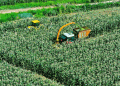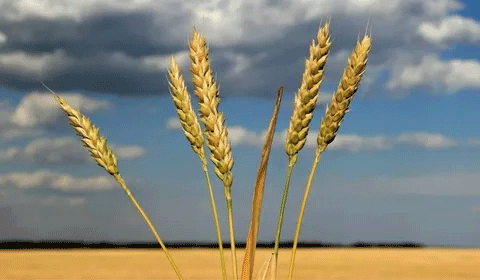
According to Rodong Sinmun (June 18), North Korea has begun its wheat and barley harvest, with authorities emphasizing the need for timely operations to maximize yields. The report states that cultivation areas for these crops have “significantly increased” compared to last year, with farms mobilizing both labor and agricultural machinery to speed up harvesting, transportation, and threshing.
Key regions leading the effort include:
- Hwanghae Province (South & North): Farms in Haeju City, Pyoksong County, and Kangryong County are reportedly meeting harvest schedules, while agricultural machinery usage has increased in North Hwanghae.
- Hamgyong & Kangwon Provinces: Counties such as Kowon, Jongphyong, and Kumya in South Hamgyong, as well as Wonsan City, Tongchon, and Anbyon in Kangwon, are accelerating harvest operations.
Challenges and Food Security Concerns
Despite the reported expansion in wheat and barley cultivation, North Korea’s agricultural sector faces persistent challenges:
- Chronic Food Shortages: The UN’s 2023 Global Report on Food Crises estimates that over 40% of North Korea’s population (10.6 million people) remains food insecure.
- Low Mechanization & Fertilizer Shortages: A 2023 FAO report highlights that outdated machinery, fuel shortages, and limited fertilizer access continue to constrain yields.
- Climate Risks: Erratic weather, including droughts and floods, threatens production—North Korea’s 2022 grain output was 4.5 million tons, well below the 5.5 million tons needed for self-sufficiency (South Korean Rural Development Administration, 2023).
While North Korea’s expanded wheat and barley cultivation may provide a modest boost to food supplies, structural inefficiencies and external pressures suggest that significant shortages will persist. Without systemic reforms, including improved agricultural technology and international cooperation, the country’s food security crisis is unlikely to be resolved soon.
Error