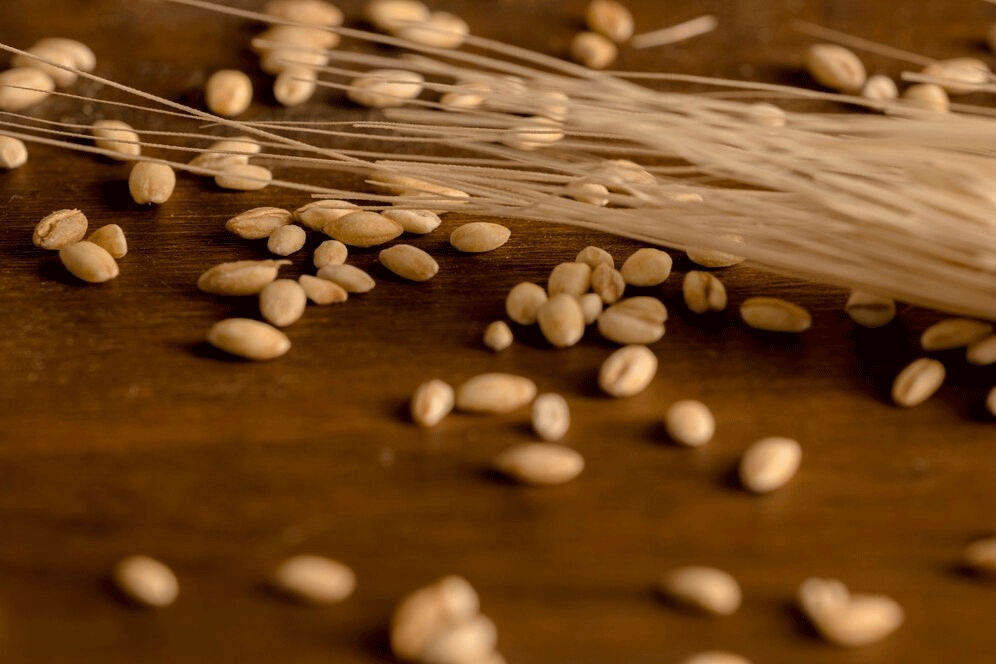
Agricultural operations in Nizhny Novgorod Oblast are demonstrating remarkable efficiency, with the region’s farmers having already harvested a substantial 1.8 million tons of grain from 93% of the planned area. According to Minister of Agriculture Nikolai Denisov, this volume represents a significant 15% increase compared to the same period in 2024, when 1.5 million tons were collected. The harvest is notable not only for its volume but also for its strong yields across multiple crops.
The reported average yields are impressive. Grain crops achieved 32 centners per hectare (3.2 t/ha), while potatoes yielded a robust 344 c/ha (34.4 t/ha), and rapeseed reached 24 c/ha (2.4 t/ha). Beyond grains, the harvest includes significant volumes of other produce: over 230,000 tons of potatoes, 58,000 tons of sugar beet, and more than 13,000 tons of vegetables. Concurrently, forage conservation for livestock is ahead of schedule, with 774,000 tons of haylage (18% above plan) and 146,000 tons of hay already secured.
This success is being leveraged to prepare for the coming year. The autumn sowing campaign is well underway, with 174,000 hectares sown to winter wheat (85% of plan), over 15,500 hectares to rapeseed, and more than 8,000 hectares to rye, bringing the total area under winter crops to 230,500 hectares.
Connecting to Broader Trends
The 15% year-on-year increase in grain production in Nizhny Novgorod reflects a broader positive trend in Russian agriculture. The USDA’s July 2024 report projected Russia’s total grain harvest to reach a near-record level, bolstered by favorable weather and improved agronomic practices. The high potato yield of 34.4 t/ha is particularly noteworthy when compared to global averages. According to FAOSTAT, the average potato yield in the European Union is approximately 40 t/ha, indicating that the region is achieving competitive productivity. The strategic focus on winter sowing aligns with global best practices for maximizing land use and stabilizing production, as winter crops often benefit from soil moisture and can yield higher than spring-planted alternatives.
The 2025 agricultural season in Nizhny Novgorod is a case study in effective, integrated farm management. The impressive harvest results are not an isolated event but part of a continuous cycle, seamlessly connected to strategic winter planting and thorough forage preparation. For farmers and agronomists, this highlights the importance of a holistic approach where harvesting, sowing, and conservation are managed as interconnected activities. For farm owners and engineers, it underscores that investing in efficient logistics and timing is as crucial as achieving high yields for overall profitability and resilience.
Error