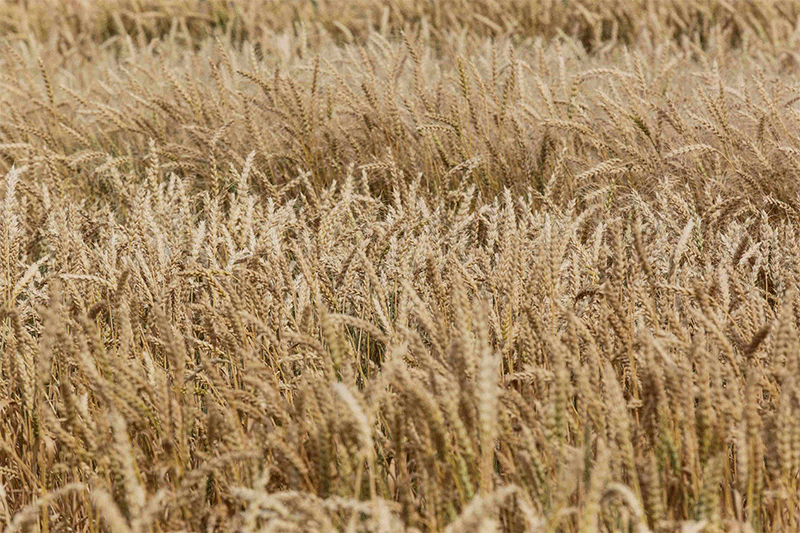
The latest data from Rosstat for October 2025 reveals a significant recalibration in the Russian grain market, presenting both challenges and opportunities for the agricultural sector. The headline shift is a 5.3% year-on-year decrease in the average producer price for wheat, now standing at 12,293 RUB per ton. This decline contrasts sharply with the stability seen in corn, which remains virtually unchanged at 13,380 RUB/ton, and the 7.4% increase in barley prices to 13,035 RUB/ton.
However, the most dramatic movements are observed in other segments. Rye and buckwheat have experienced remarkable surges, climbing 28% (to 11,014 RUB/ton) and 33.5% (to 16,679 RUB/ton), respectively. Oats also joined the upward trend with a more modest 8.36% gain. This price explosion for niche cereals is likely driven by strong demand, both domestic and export-oriented, coupled with potentially constrained supply or increased production costs for these specific crops.
Conversely, the market has softened for some alternatives. Millet prices fell by 18.1% to 9,378 RUB/ton, and the category of dried legumes saw a sharp decline of 27.6% to 18,201 RUB/ton. This drop may indicate oversupply, shifts in consumer demand, or increased import competition in these categories.
Globally, while specific RUB-denominated prices are unique to the Russian market, the trends of crop-specific volatility align with wider patterns. The FAO’s Cereal Price Index has noted similar divergences, often driven by regional yield variations, geopolitical factors affecting trade flows, and changing consumption patterns. The surge in buckwheat and rye prices mirrors global instances where crops with smaller cultivation areas experience high volatility due to supply-demand imbalances.
The October 2025 price data underscores a critical lesson: blanket strategies for grain cultivation are increasingly risky. The market is clearly rewarding diversification and keen market analysis. Farmers and agronomists should interpret the plummeting wheat price not merely as a loss leader but as a signal to evaluate cost structures and potential rotations. The spectacular rise of rye and buckwheat highlights lucrative opportunities for those able to adapt their agronomy and capture these niche markets. Meanwhile, the declines in millet and legumes suggest a need for careful contract negotiation and a review of the competitiveness of these crops on specific farms. Success will belong to those who leverage such detailed price analytics to inform their 2026 crop planning, balancing agronomic suitability with sophisticated market foresight.
Error