

Myanmar’s Pulse Export Achievements Amid Market Challenges
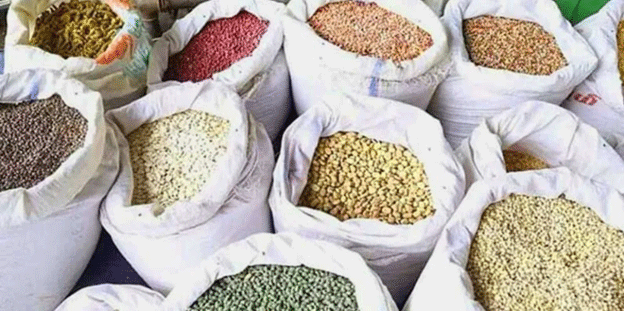
Myanmar, one of the world’s leading exporters of pulses, has made significant strides in its agricultural sector, meeting its export goals for 2024. Despite this success, the country’s pulse market is facing challenges, particularly with the declining prices of black gram and mung beans. These two crops, which are largely exported to India, have been significantly affected by global currency fluctuations and a reduced demand in India.
- Price Trends and Market Challenges
As of mid-November, black gram prices fell from a high of 3.8 million Myanmar Kyats per ton in the last week of October to 3.57 million Kyats per ton. Mung bean prices experienced a similar decline, dropping from over 4.31 million Kyats per ton to around 3.87 million Kyats per ton due to the weakening exchange rate of the U.S. dollar. These price drops have been particularly concerning for Myanmar’s farmers, who depend on steady export revenues from these crops.
The primary driver behind these fluctuations is the U.S. dollar’s volatile exchange rate. The value of the dollar has impacted the purchasing power of Indian buyers, Myanmar’s largest export market for pulses. This, coupled with slower purchasing activity in India, has led to a significant dip in demand, thus influencing the prices of these pulses.
- Myanmar’s Export Performance
Despite the price drops, Myanmar’s pulse export sector has maintained stability, meeting the targeted export figures for 2024. Between April and October 2024, the country successfully exported a total of 2.98 million tons of pulses, surpassing expectations. Black gram, mung beans, and pigeon peas (wood beans) are among the most significant contributors to Myanmar’s agricultural exports, with black gram alone accounting for 800,000 tons of the total export volume.
Notably, Myanmar’s total pulse exports for 2024 are expected to reach over 1.5 million tons, a steady performance in comparison to previous years. This marks a continuation of the trend seen since the start of the bean season in January 2024, when pulse prices were strong and farmers saw positive returns.
- The Role of Pulses in Myanmar’s Economy
Pulses are a cornerstone of Myanmar’s agricultural economy, contributing not only to the country’s GDP but also to its foreign exchange reserves. The country’s success in pulse exports—especially in key markets like India and China—has played an important role in boosting the national economy. Myanmar’s agricultural sector, especially its pulse production, is vital for rural employment, food security, and sustaining the livelihoods of millions of farmers.
While the declining prices of black gram and mung beans pose challenges to Myanmar’s pulse farmers, the country’s agricultural sector remains resilient. Meeting export targets demonstrates the success of Myanmar’s pulse industry in navigating global market conditions. However, the volatility of currency exchange rates and fluctuating demand from India highlight the importance of diversifying markets and improving price stability. With continued strategic planning and investments in agricultural technology, Myanmar’s pulse sector has the potential to further strengthen its position as a global supplier of high-quality pulses.
Error


