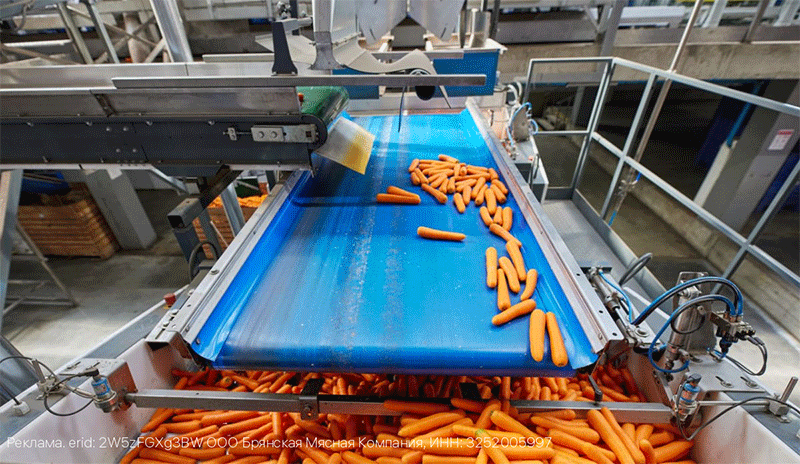
In 2024, Miraторг, one of Russia’s largest agri-food producers, reported a twofold increase in deep-processed vegetable output at its Tula region facility, rising from 6.8K to 12.8K metric tons year-on-year. The most significant growth came from root vegetables for traditional dishes like borscht (+5K tons), alongside broccoli (+300 tons), legumes (+300 tons), and vegetable blends (+142 tons). The company also introduced blanched frozen cereals, producing 330 tons in its debut year.
Why Frozen Vegetables? Global and Local Trends
The frozen food market is booming globally, projected to reach $404B by 2027 (Statista, 2024), driven by convenience and nutrient retention. Miraторг’s expansion aligns with this trend, leveraging:
- High-tech processing: Advanced blanching and flash-freezing preserve 90–100% of vitamins (IFE, 2023), outperforming canned alternatives.
- Food safety: The facility’s FSSC 22000 (v.6) certification ensures compliance with international standards, critical for export potential.
- Cost efficiency: Automated systems reduce labor costs and environmental contamination risks.
Farmer and Agribusiness Insights
For farmers, this growth signals opportunities:
- Contract farming: Miraторг’s demand for “borscht set” vegetables (carrots, beets, etc.) could stabilize local crop prices.
- Sustainable practices: The company’s closed-loop processing minimizes waste—a model for circular agriculture.
Error