
Maximizing the Value of Wheat Straw: How Zhanglang County’s Innovative Practices Are Boosting Beef Production and Sustainability
As summer wheat harvesting progresses across China, Zhanglang County in Gansu Province is demonstrating an innovative approach to agricultural sustainability by transforming wheat straw into a valuable resource for local beef production. This strategic initiative not only supports the county’s beef industry but also promotes environmentally friendly practices in agriculture.
The Benefits of Wheat Straw for Cattle Farming
1. Wheat Straw as High-Quality Cattle Feed
Wheat straw, often considered a byproduct of wheat production, is being recognized for its high nutritional value for cattle. According to recent studies, wheat straw is rich in dietary fiber, which is crucial for the digestion of ruminants like cattle.
- Nutritional Value: Wheat straw contains around 2-4% protein and 40-45% fiber. Despite being low in protein compared to other feed options, it provides essential roughage for digestive health and can be complemented with supplementary feeds for balanced nutrition.
- Economic Efficiency: Wheat straw is a cost-effective feed option. With Zhanglang County’s current price for straw around ¥300 per ton, it provides a low-cost alternative to more expensive feed sources.
Recent Data: A study by the Chinese Academy of Agricultural Sciences in 2023 found that integrating straw into cattle diets can reduce feed costs by up to 30% while maintaining or even improving growth rates in beef cattle.
2. Zhanglang County’s Straw Collection and Utilization
Local initiatives in Zhanglang County have been instrumental in optimizing the use of wheat straw for beef cattle.
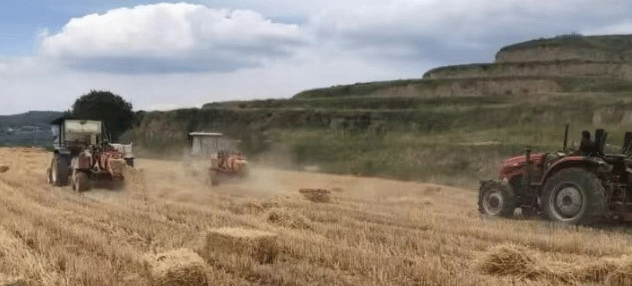
- Collection Efforts: During the recent wheat harvest, Zhanglang County managed to collect over 3,000 tons of wheat straw. This initiative is part of a broader strategy to manage straw efficiently and support the local beef industry.
- Processing: The straw is processed using large-scale baling machines, which compress and package the straw for easy storage and transportation.
Recent Developments: In 2024, the county’s approach to straw management has resulted in a 20% increase in straw collection efficiency compared to previous years, as reported by the Zhanglang Agricultural Bureau.
3. The Economic and Environmental Impact
The strategic use of wheat straw has significant implications for both the economy and the environment.
- Economic Impact: The practice supports local farmers by offering compensation for straw collection and promotes a circular economy where agricultural byproducts are repurposed for additional revenue streams. According to Zhanglang County’s 2024 economic report, this initiative has contributed an estimated ¥6 million in additional income for local farmers.
- Environmental Benefits: Utilizing wheat straw for cattle feed reduces straw burning, a common practice that contributes to air pollution. By integrating straw into feed, Zhanglang County is reducing its carbon footprint and supporting environmentally sustainable farming practices.
Recent Findings: The Ministry of Agriculture and Rural Affairs of China reports that regions employing straw recycling methods have seen a 15% reduction in air pollutants associated with straw burning.
Zhanglang County’s Approach to Sustainable Agriculture
1. Comprehensive Resource Management
Zhanglang County’s model exemplifies a successful integration of agricultural production and environmental management. The county’s approach involves:
- Straw Collection: Coordinated efforts to gather and process wheat straw from local farms.
- Feed Production: Using advanced technology to convert straw into high-quality cattle feed.
- Environmental Stewardship: Reducing straw burning and enhancing soil health through sustainable practices.
2. Future Prospects
Looking ahead, Zhanglang County plans to expand its “crop-straw-cattle” model to include more farms and increase the efficiency of straw utilization. The county aims to further develop this model into a comprehensive system for agricultural sustainability.
Future Outlook: The Gansu Provincial Department of Agriculture has expressed support for expanding this model, with plans to introduce additional subsidies and technical support for straw utilization initiatives.
Zhanglang County’s innovative use of wheat straw represents a significant advancement in sustainable agriculture practices. By transforming what was once a waste product into a valuable feed resource, the county is not only enhancing local beef production but also setting a precedent for environmental responsibility in agriculture. This approach aligns with broader national goals for sustainable development and offers a practical example for other regions to follow.
Error