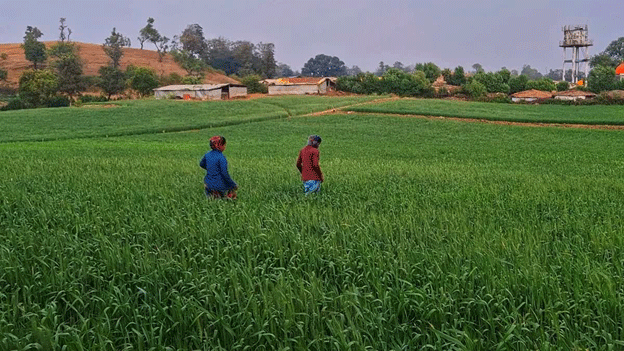
In the heart of Maharashtra’s Amravati district, Masondi village is redefining agriculture with its commitment to organic farming. Nestled in the dense forests of Melghat at an altitude of 1,180 meters, this small village of 500 residents has become known as the “Wheat Granary” of the region. Producing over 1,000 quintals of wheat annually, Masondi’s success lies in its rejection of chemical fertilizers and adoption of sustainable farming practices.
Why Masondi Wheat Stands Out
- Superior Grain Quality:
The wheat produced in Masondi is firmer and denser than the varieties commonly grown in surrounding areas. This quality has earned it a premium status at the Achalpur Agricultural Market Committee. - High Demand from Traders:
Traders from as far as Baitul in Madhya Pradesh frequently visit the village to procure this sought-after wheat. - Sustainable Practices:
Masondi farmers rely on organic fertilizers and traditional farming techniques, ensuring their produce is free from chemical residues and environmentally sustainable.
The Role of Irrigation in Masondi’s Success
The turning point in Masondi’s agricultural journey came two years ago when the government constructed a small dam near the village. This development ensured consistent irrigation, allowing farmers to grow wheat abundantly without relying solely on rainfall.
The Ripple Effect: Inspiring Others
Masondi’s success story is not just about numbers; it’s about inspiring neighboring regions to adopt sustainable agriculture. Farmers from other villages are visiting Masondi to learn about organic farming techniques and efficient resource utilization.
Additionally, the village’s approach aligns with global trends favoring organic produce as consumers become more health-conscious. This positioning gives Masondi’s farmers a competitive edge in both local and regional markets.
Challenges and Future Prospects
Despite its achievements, Masondi faces challenges, including:
- Market Access: While demand is high, farmers still rely on traders visiting the village. Expanding access to broader markets could further enhance profitability.
- Scaling Production: Limited infrastructure may hinder the ability to increase production or diversify into value-added wheat products.
Addressing these issues through government support and community initiatives could further elevate Masondi’s status as a model village for sustainable agriculture.
Masondi village stands as a shining example of how organic farming can transform rural communities, improve livelihoods, and contribute to sustainable agriculture. Its high-quality wheat, nurtured through environmentally friendly practices, meets growing consumer demand while preserving the ecosystem. As the world leans towards sustainable food production, villages like Masondi demonstrate the potential of organic farming in shaping the future of agriculture.
Error