

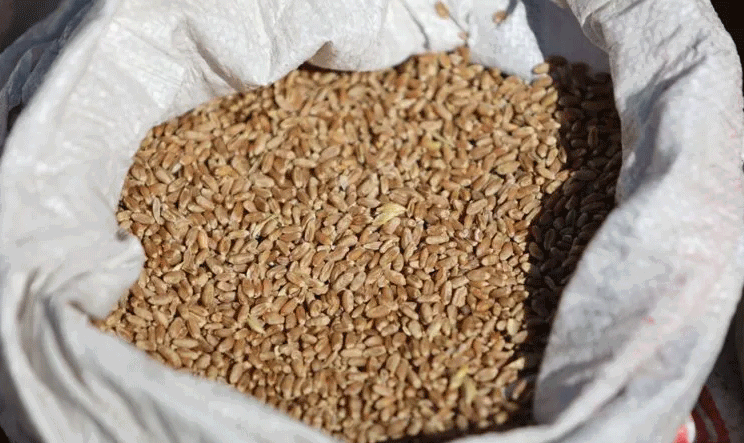
For farmers, agronomists, and exporters across Russia’s agricultural heartland, the story of Kurgan Oblast provides a compelling case study in modern agricultural trade. Moving beyond traditional bulk commodities, the region is demonstrating how strategic diversification and targeting specific international niches can drive export growth and profitability. According to data released by the Ural branch of Rosselkhoznadzor, Kurgan has exported over 145,000 tons of grain products since the start of the year, with its reach extending deep into Asia.
The breakdown of exports reveals a sophisticated and diversified strategy. The overwhelming volume partner remains Kazakhstan, a key regional market, which received a wide variety of products: approximately 52,000 tons of wheat, 5,000 tons of barley, over 2,000 tons of rapeseed, 1,300 tons of flaxseed, 15,000 tons of rye, and smaller significant quantities of peas, lentils, and buckwheat.
However, the standout story is the lucrative trade with China. Kurgan has become a significant supplier of specific raw materials to the world’s largest market, exporting 17,500 tons of peas, 12,000 tons of oats, 13,000 tons of barley, and a substantial 34,000 tons of flaxseed. This aligns with global trends; according to a 2023 report by the Food and Agriculture Organization (FAO), global trade in pulses and oilseeds is consistently growing faster than that of cereals, driven by demand for plant-based proteins and healthy oils. China, in particular, remains a massive importer of these commodities to feed its livestock and population.
Further afield, Kurgan has secured contracts with other strategic partners: Belarus received soy and flaxseed, Kyrgyzstan took wheat, and notably, shipments reached Turkey (105 tons of lentils, 210 tons of flaxseed) and Iran (371 tons of lentils). This geographic spread mitigates risk and taps into growing Middle Eastern and Eurasian demand.
This export success is being bolstered by federal initiatives. As reported, support for small and medium-sized enterprises (SMEs) in Kurgan to boost exports includes federal funding exceeding 11 million rubles. This type of support is critical for smaller players to navigate complex international logistics, phytosanitary regulations, and market entry barriers.
Kurgan Oblast’s export performance is more than a local success story; it is a replicable model for agricultural producers across Russia. The key takeaways are diversification beyond staple grains into high-demand niches like pulses, oilseeds, and specialized grains, and strategic market targeting based on geographic proximity and identified demand. By focusing on value-added crops and leveraging state support for SMEs, other regions can similarly enhance their profitability and resilience on the global stage, ensuring that Russian agriculture is not just a volume player, but a diversified and strategic exporter.
Error