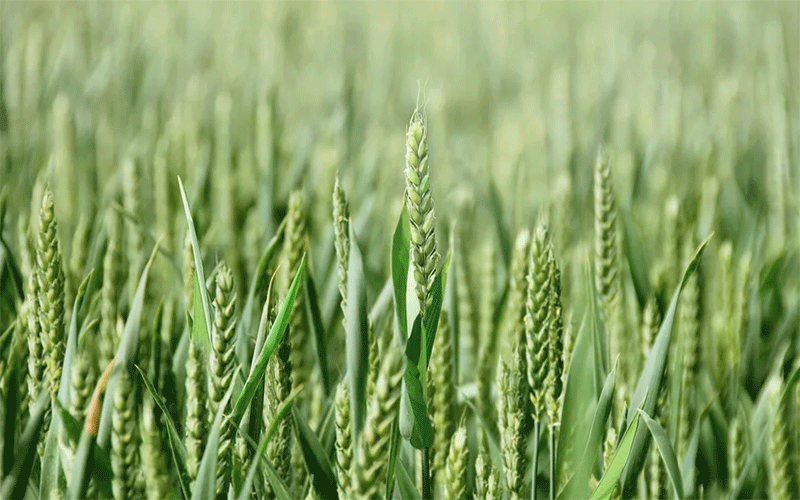
As of July 3, 2025, the Novorossiysk branch of FGBU “TsOK APK” has analyzed the first 119 wheat samples from Krasnodar Krai’s new harvest, representing 72,000 metric tons of grain. The findings indicate a solid start to the season, with 78% classified as Class 3 and 12% as Class 4, making 90% of the tested wheat suitable for food production (higher-grade flour without improvers). The remaining 10.8% fell into Class 5, typically used for animal feed or industrial processing.
Key Quality Metrics
- Gluten Content: Higher than 2024 levels—26% in Class 3, 21% in Class 4, and 20% in Class 5. This is crucial for baking quality, as gluten directly impacts dough elasticity and bread structure.
- Protein Levels: 14.8% (Class 3), 13.2% (Class 4), and 12.7% (Class 5), aligning with food-grade requirements.
- Test Weight (Natural): 760 g/L (Class 3) and 794 g/L (Class 4), meeting GOST 9353-2016 standards.
- Falling Number (Sprout Damage Indicator): Excellent results—383 sec (Class 3), 382 sec (Class 4), and 373 sec (Class 5), indicating minimal pre-harvest sprouting.
- Safety: No harmful impurities, pests, or contaminants detected.
Broader Monitoring Efforts
The state grain quality monitoring program will assess soft and hard wheat from 49 municipalities in Krasnodar Krai and Adygea, with plans for 14,000+ samples and 267,000+ lab tests. This free nationwide initiative ensures transparency in grain quality data, aiding farmers, traders, and policymakers in domestic and export planning.
The initial results from Kuban’s 2025 wheat harvest suggest a strong food-grade crop, with high gluten and protein levels enhancing milling potential. As harvesting continues, final assessments will refine market forecasts and inform grain stockpile decisions. For now, the data signals a promising season for Russian wheat producers.
Error