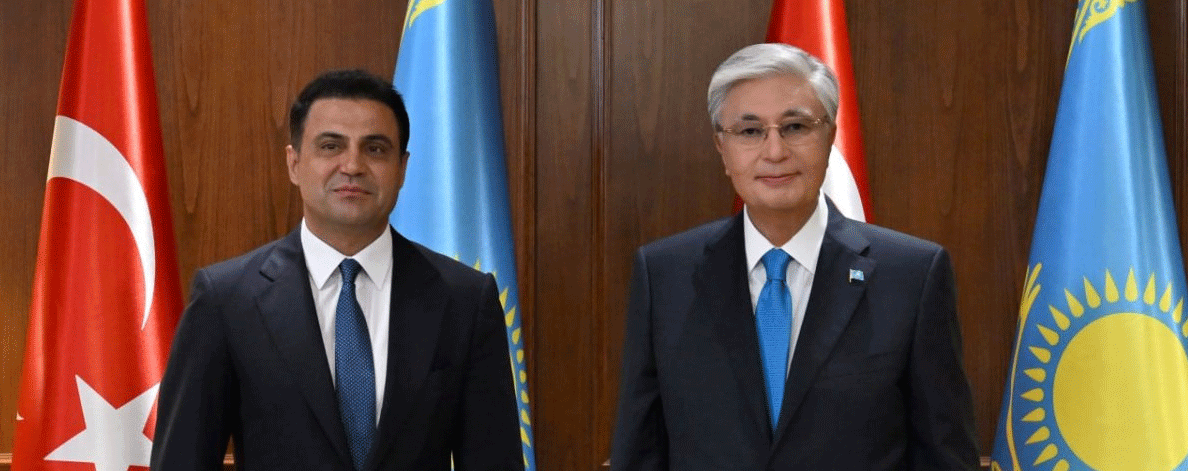
Kazakhstan’s agricultural sector is poised for transformation with the announcement of a new deep-processing plant for wheat and peas in Astana, a joint initiative between the government and global agribusiness leader Tiryaki Holding. During a meeting with President Kassym-Jomart Tokayev, CEO Süleyman Tiryakioğlu outlined the plant’s potential to elevate Kazakhstan’s processing capabilities, integrate cutting-edge technologies, and upskill local professionals.
Why This Matters for Farmers and Agribusiness
- Value Addition: The plant will move Kazakhstan beyond raw commodity exports—a critical shift, given that only 30% of Kazakh wheat is currently processed domestically (FAO, 2023). Deep processing (e.g., into starch, protein isolates, and gluten) could unlock higher-margin markets.
- Tech Transfer: Tiryaki’s expertise in grain and oilseed processing (it ranks among the top 10 global agro-exporters) will introduce automation and AI-driven quality control, aligning with global trends where agri-tech investments grew by 22% YoY in 2023 (AgFunder).
- Supply Chain Modernization: The talks emphasized digitizing warehouse infrastructure and elevator upgrades—key for reducing post-harvest losses, which currently cost Kazakhstan up to 1.5 million tons of grain annually (World Bank).
Global Context and Opportunities
With global demand for plant-based proteins projected to grow at 12.4% CAGR through 2030 (MarketsandMarkets), Kazakhstan’s pea processing stands to gain. Meanwhile, efficient logistics (e.g., rail and Caspian Sea routes) could position the country as a hub for Central Asian and EU markets, competing with Russia and Ukraine.
The Astana plant symbolizes Kazakhstan’s push toward agri-industrial sophistication, blending foreign investment with local capacity building. For farmers, this means access to premium markets; for scientists and engineers, a chance to engage with advanced agro-processing R&D. Success hinges on sustained policy support and infrastructure upgrades—but the foundation is solid.
Error